Brackets
As of this writing 28 different species of fungi have been identified at Nixon park on INaturalist. Given that Pennsylvania hosts over 6,000 species of fungi we've identified a very small percentage of species likely to be there.
This post describes three members of the fungi family known as brackets or polypores.
When a tree dies microbes and fungi begin breaking down the wood constructed from cellulose, hemicellulose and lignin. Cellulose and hemicellulose are digested easily, but lignin requires specialized fungi. At the park, three of these specialists are common bracket fungi: turkey tail, lumpy bracket, and cracked-cap polypore.
Bracket fungi colonize a living tree or dead wood when spores land on exposed wood, or bark wounds. If conditions are moist enough, a spore germinates. Microscopic tubular threads called hyphae release enzymes, softening the tree’s cell walls and absorbing dissolved nutrients. The hyphae branch into a hidden network called the mycelium, the true body of the fungus.
When temperature and moisture conditions are right, the fungus forms a bracket—shelf- or fanlike structures that project from the trunk or log. These brackets are the "fruiting body" of the fungus formed from the same mycelium that permeates the wood and they produce spores on the specialized surfaces beneath the cap. Some species produce annual brackets that die back each year, while others form perennial brackets that add new layers over time.
Bracket fungi are well adapted to survival: their shelf shape sheds water, remains rigid, and provides a broad spore-producing surface. Many are hard, woody, or corklike and last through winter. Each occupies a specific ecological niche.
These fungi are also known as polypores because the underside of the bracket is covered with minute tubes or pores. Millions of microscopic spores are produced in these tubes and discharged into the air as the mycelium continues to feed.
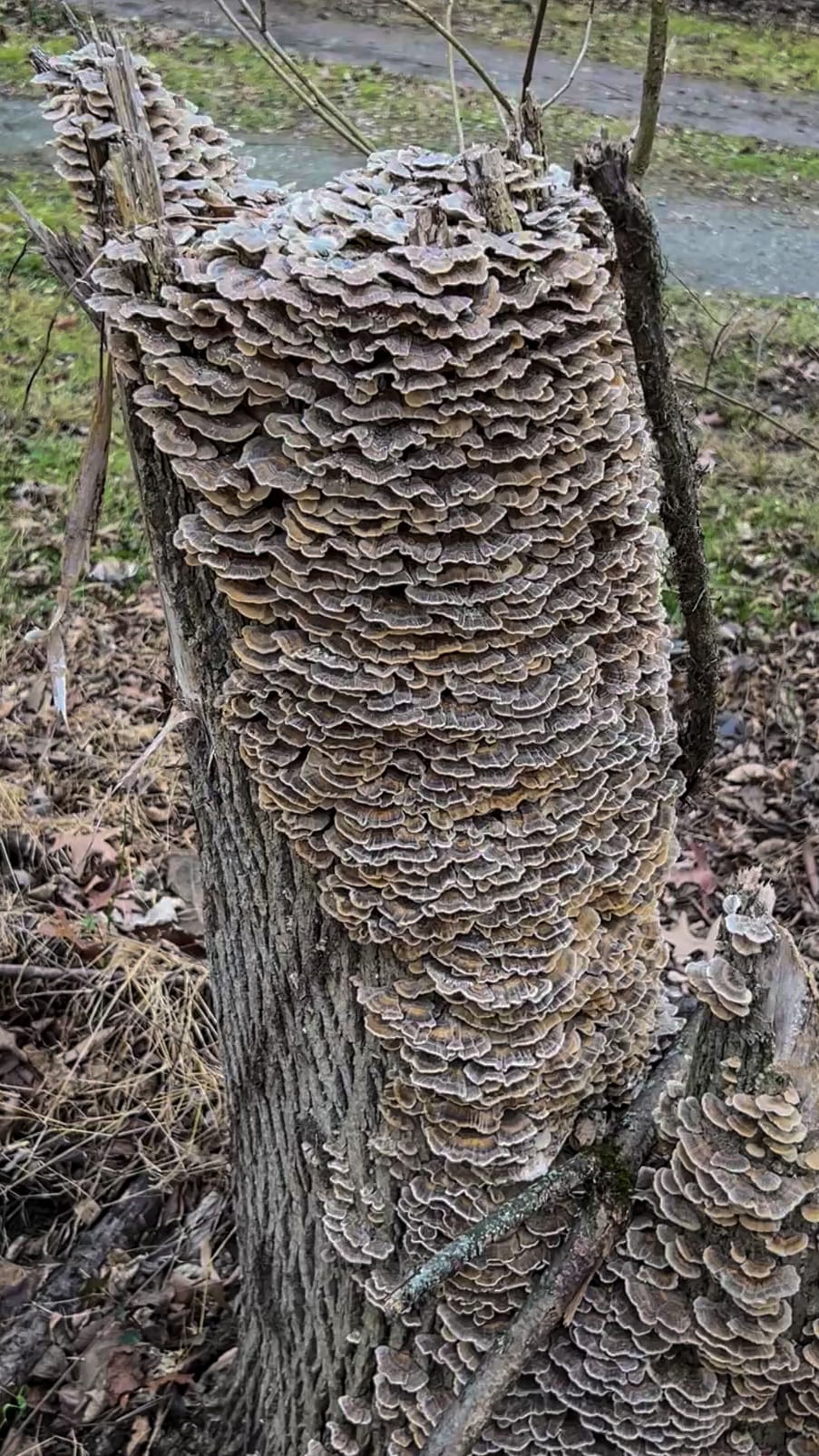
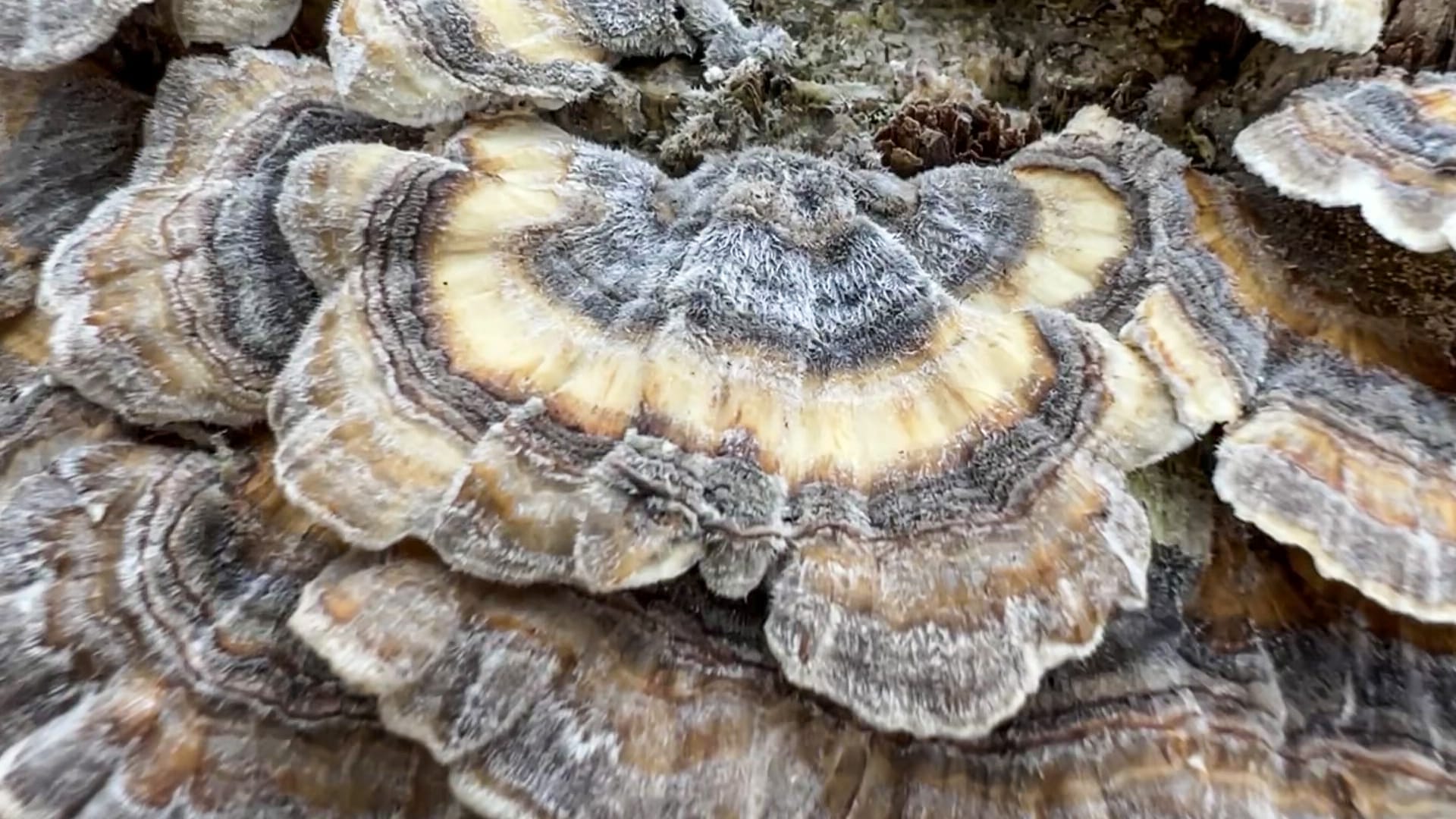
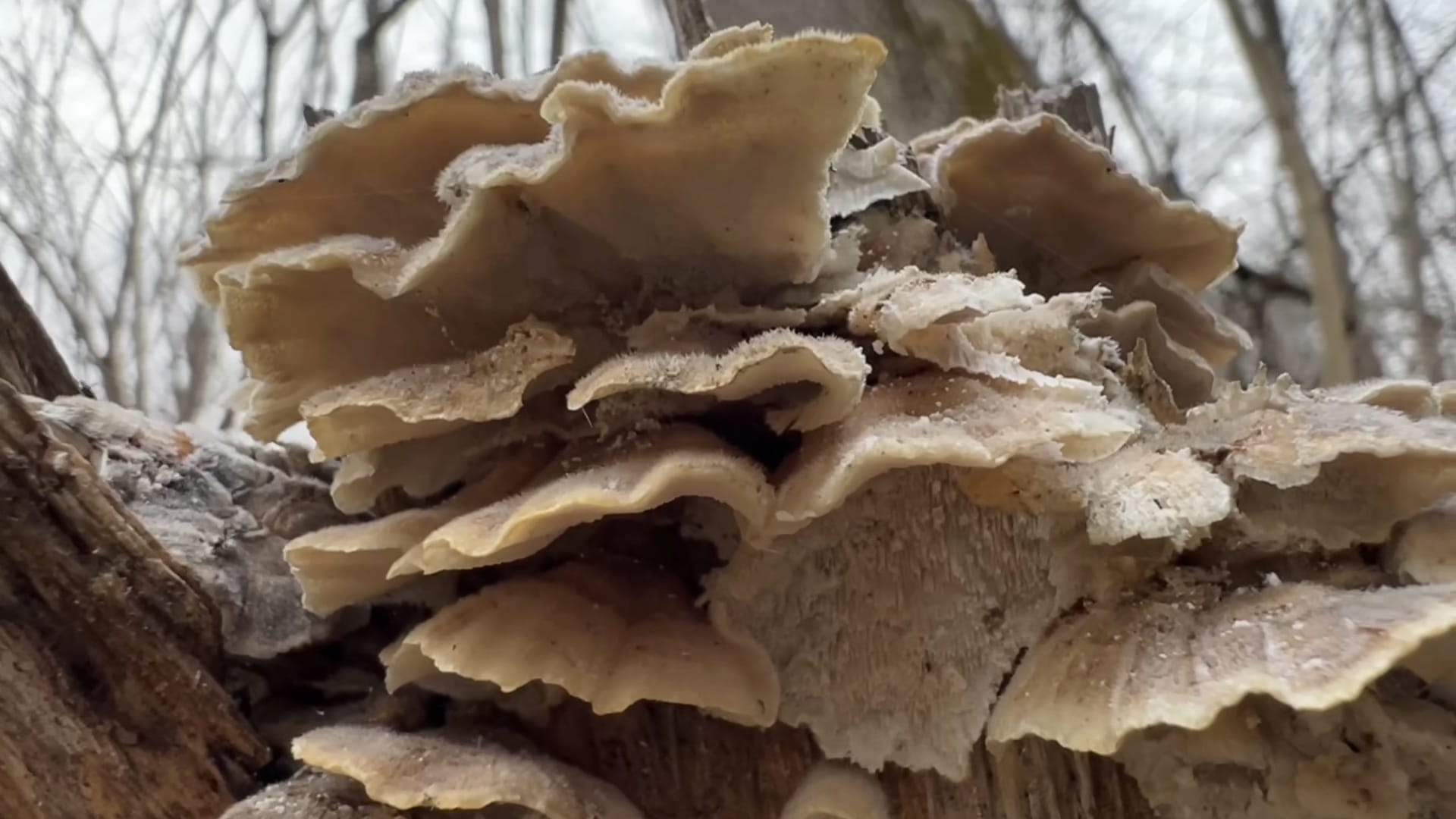
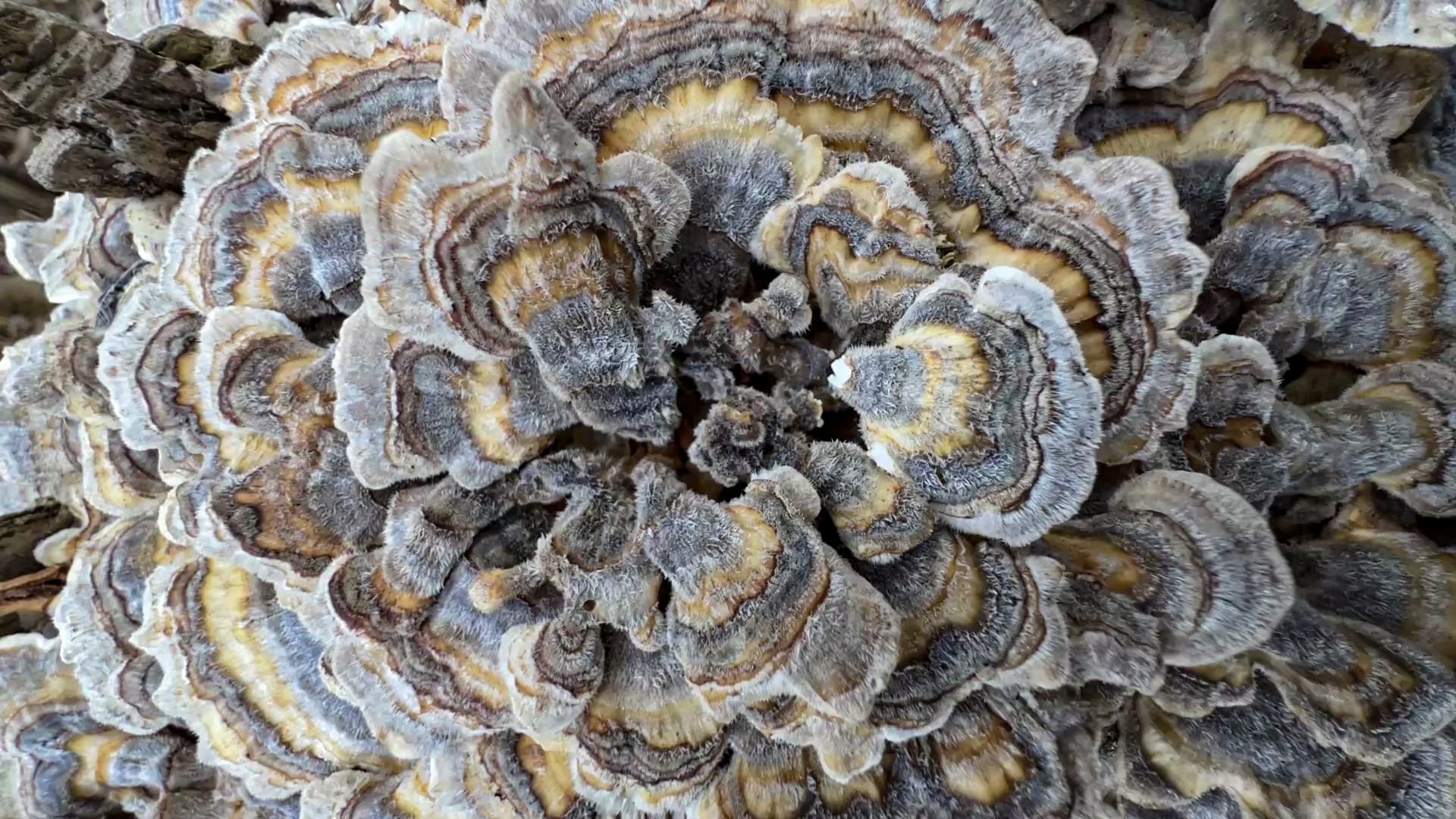
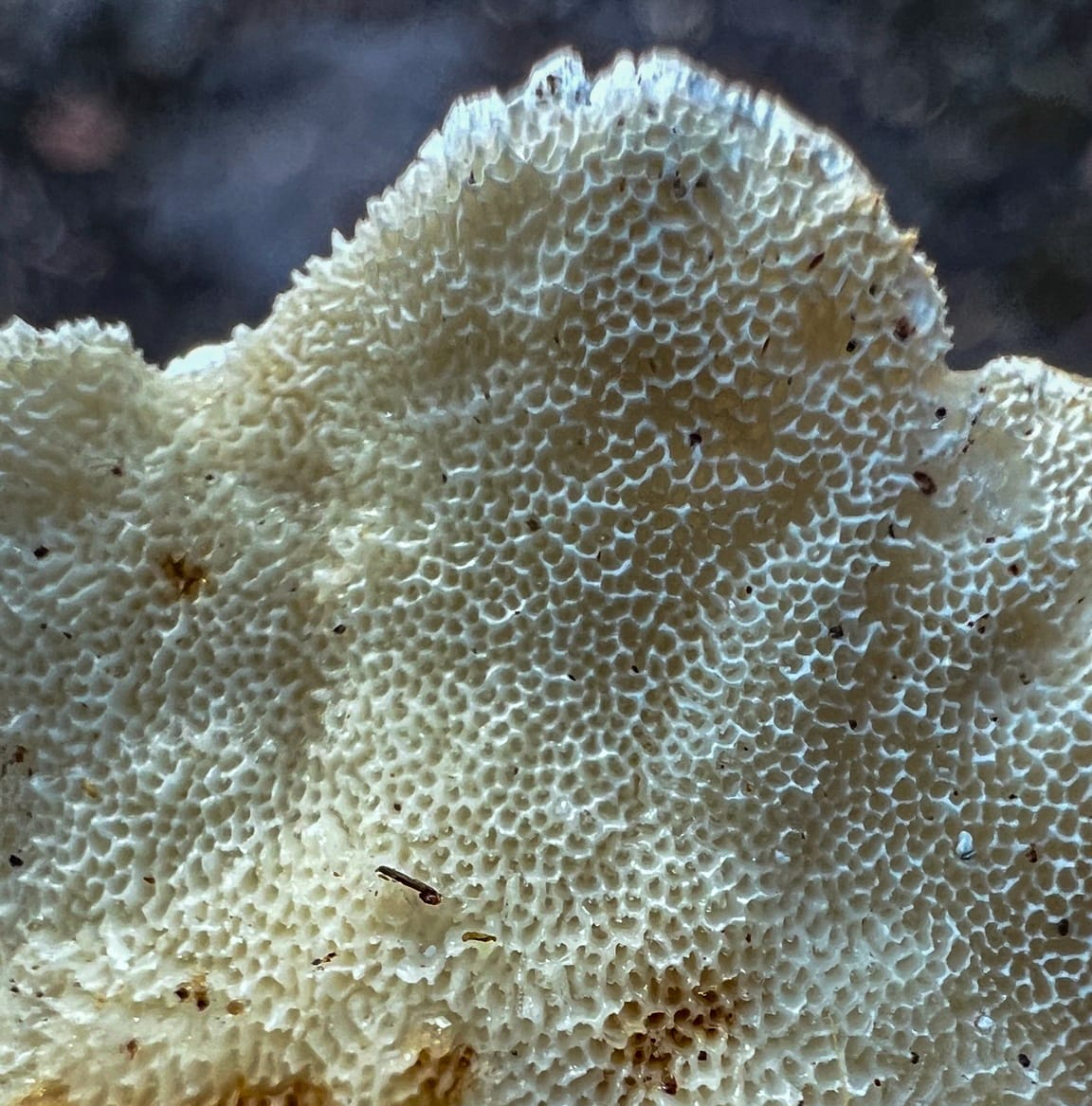
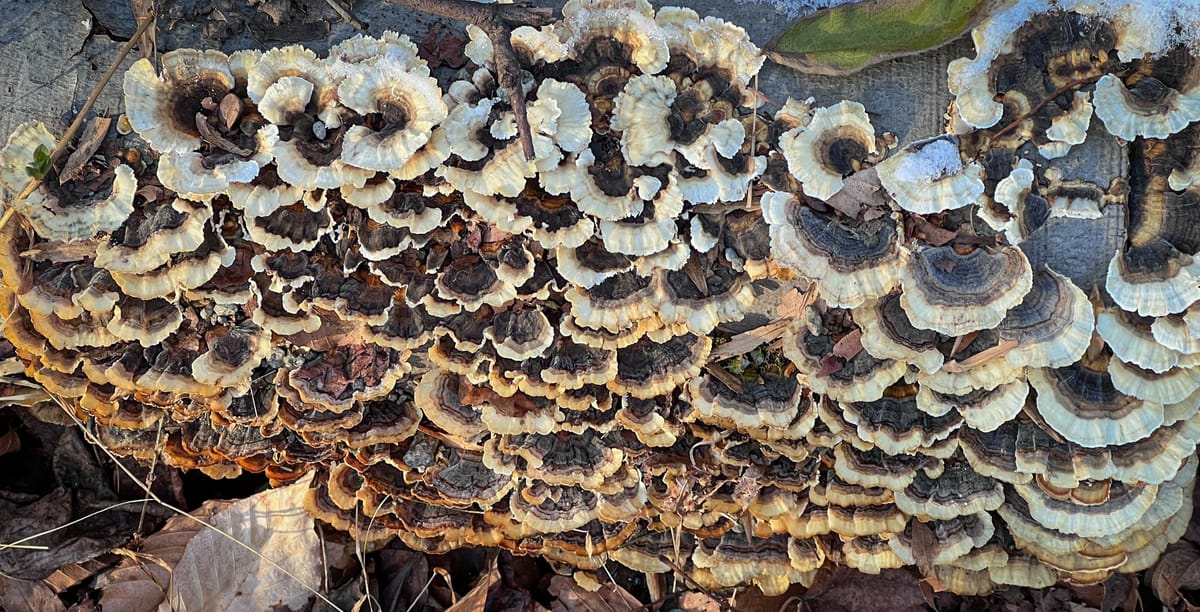
Turkey Tail covering a stump, the fan like structure that gives this fungi its name, two closeups of layered growth pattern, the underside showing pores.
Turkey tail (Trametes versicolor) brackets form flexible layers on dead wood, often nearly covering the log or branch. Velvety concentric bands of browns and grays, along with the fan-like shape, resemble the tail feathers of a wild turkey. Turkey tails are annual, yet so common they often appear permanent on damp hardwood debris.
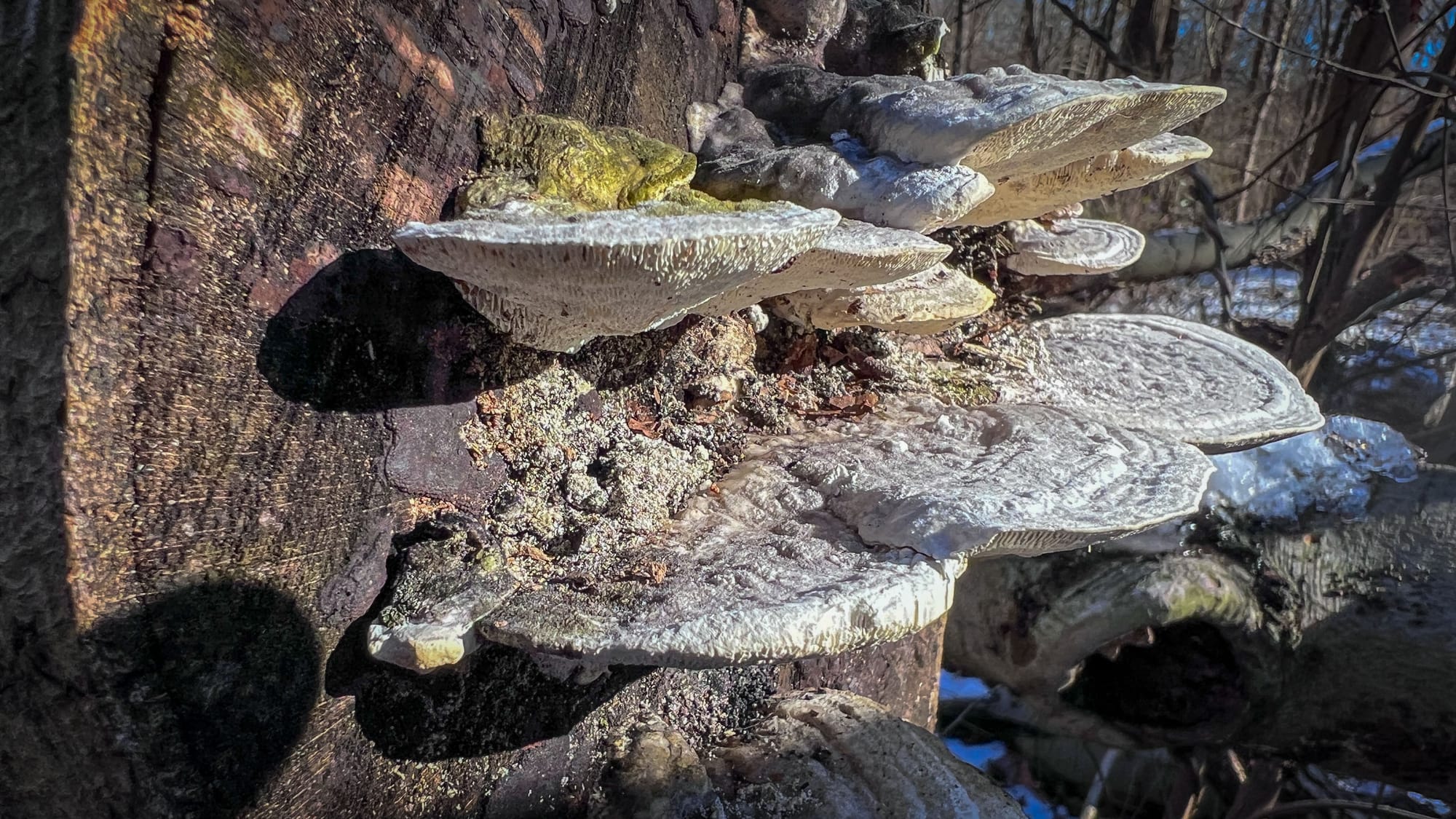
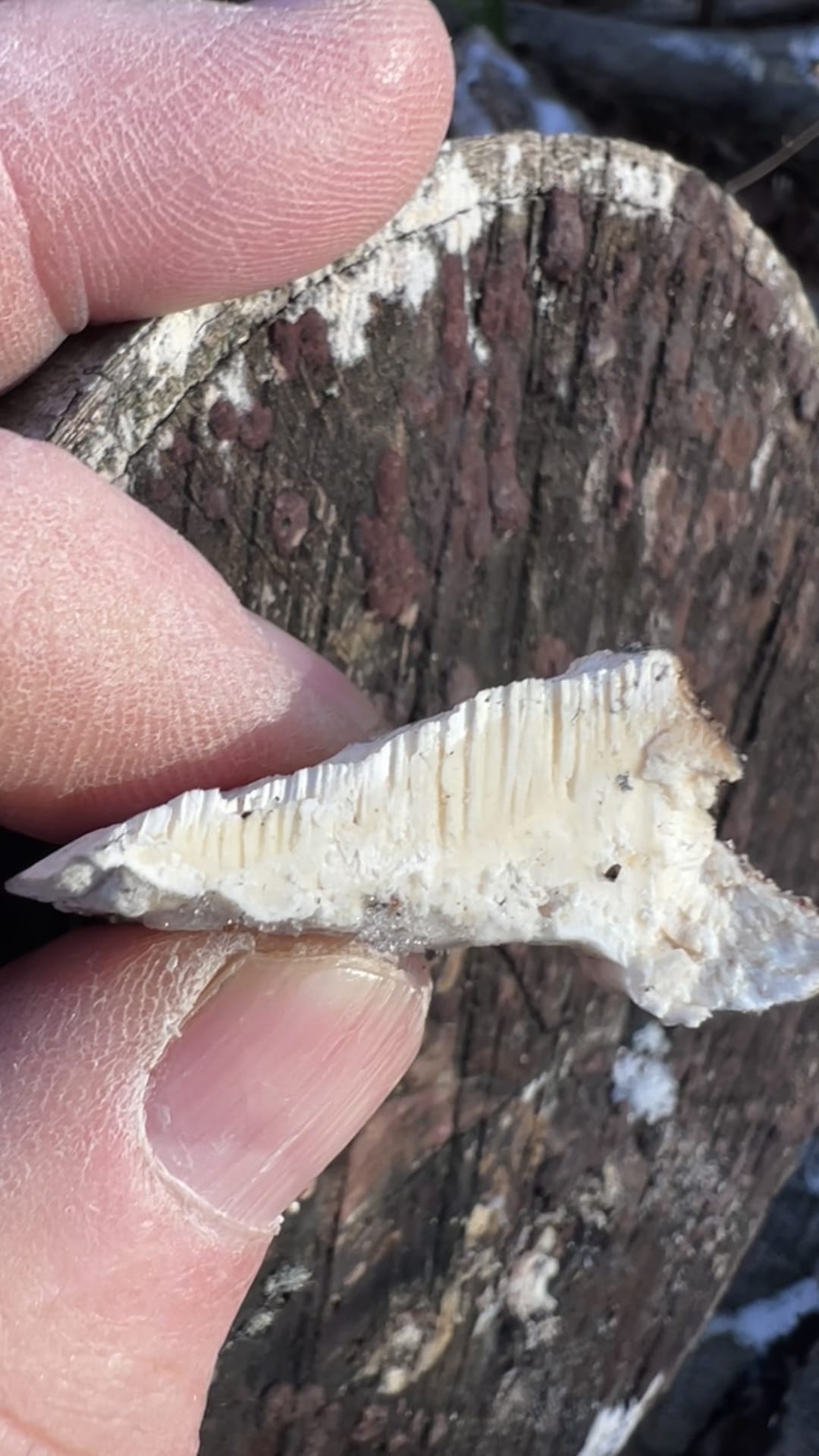
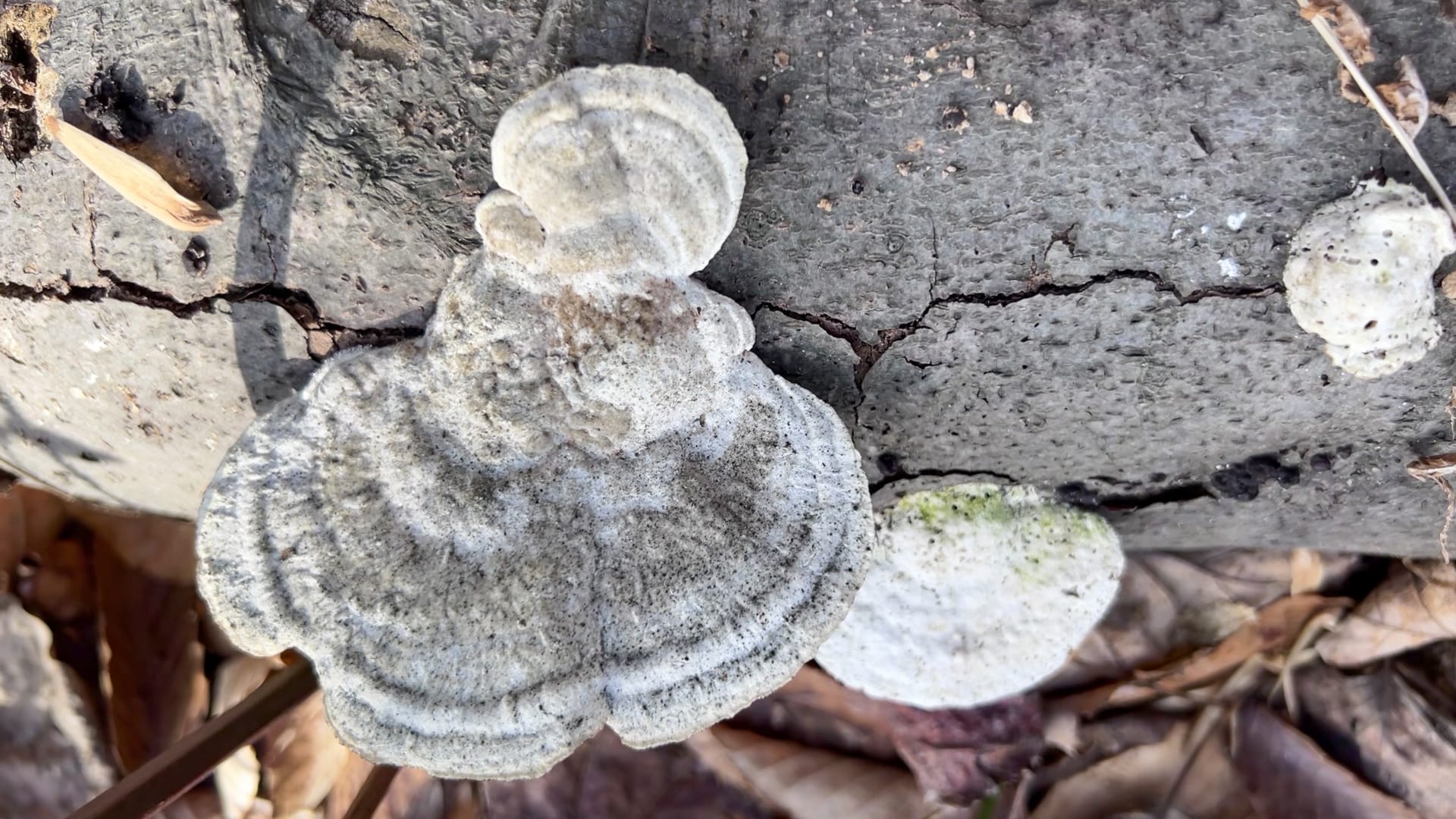
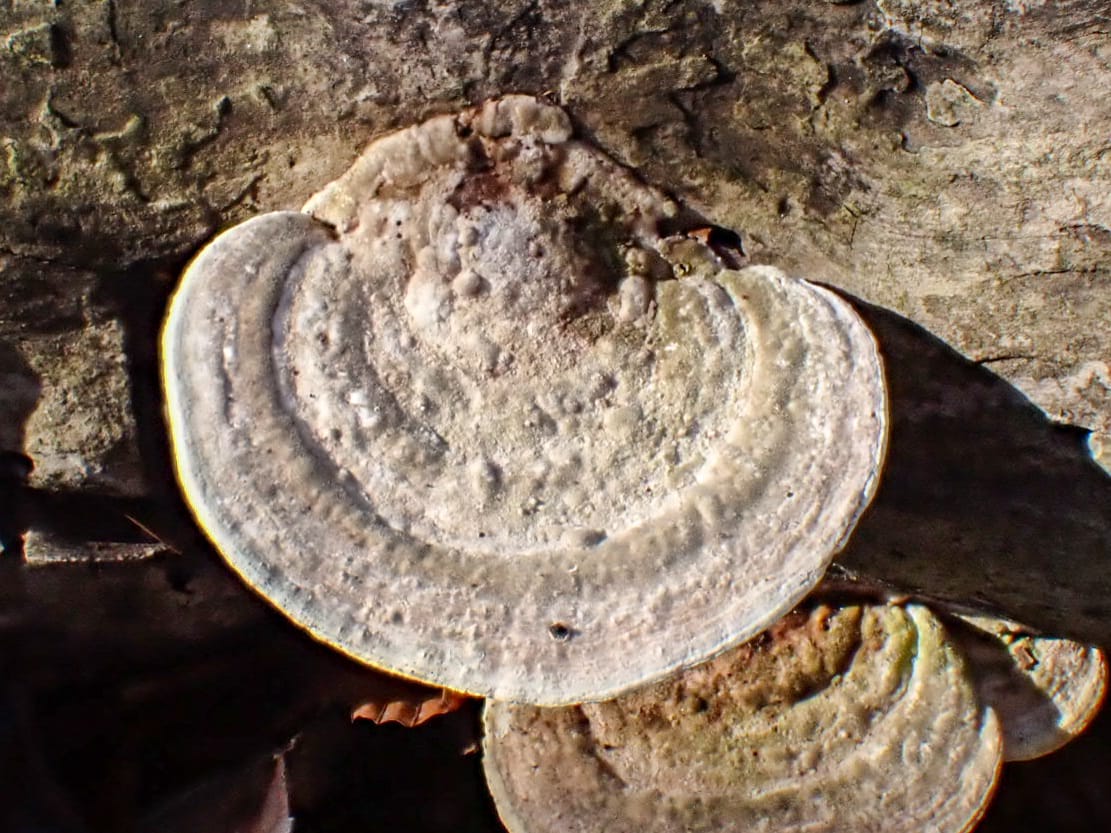
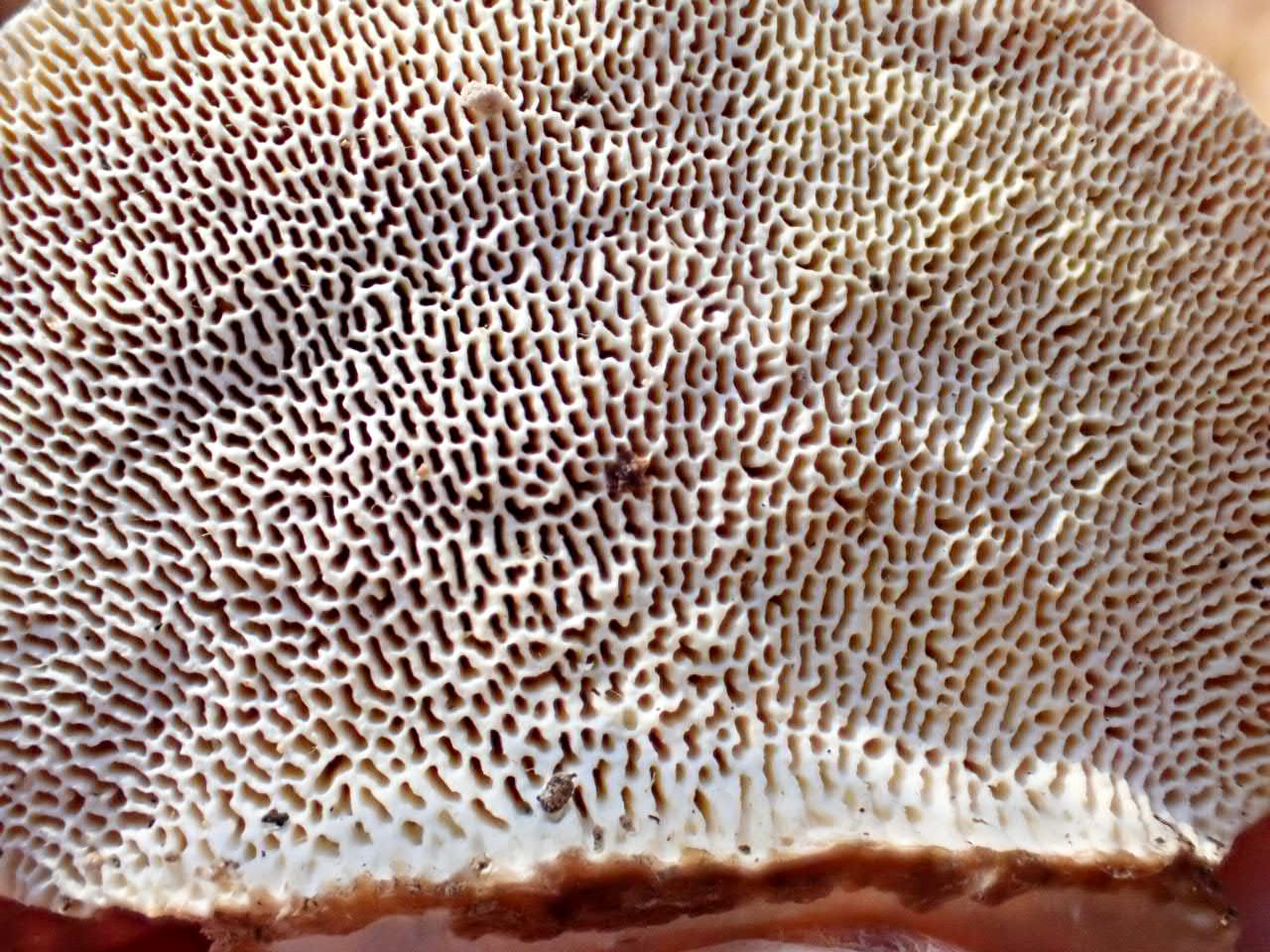
Lumpy Bracket growing from the end of a log, cross section showing pore structure, Growing on the side of a beech log, the lump where it attaches to the wood, pores on underside.
Lumpy bracket (Trametes gibbosa) forms broad, pale shelves with a swollen, humped margin where it attaches to the side or end of larger sections of dead hardwoods. The underside has irregular pores that lengthen toward the base. Lumpy brackets are thicker than turkey tail and normally grow singly or in short tiers.
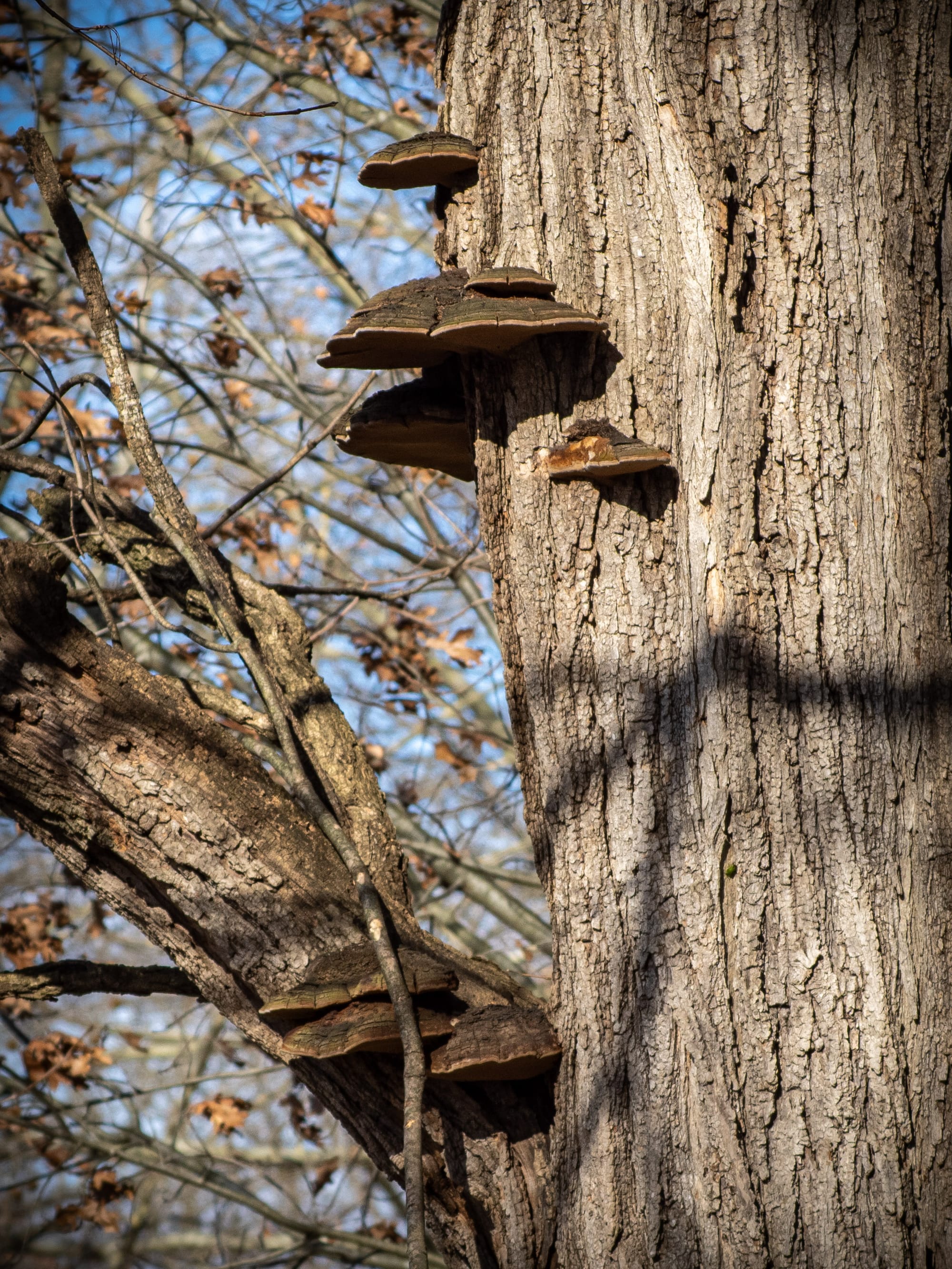
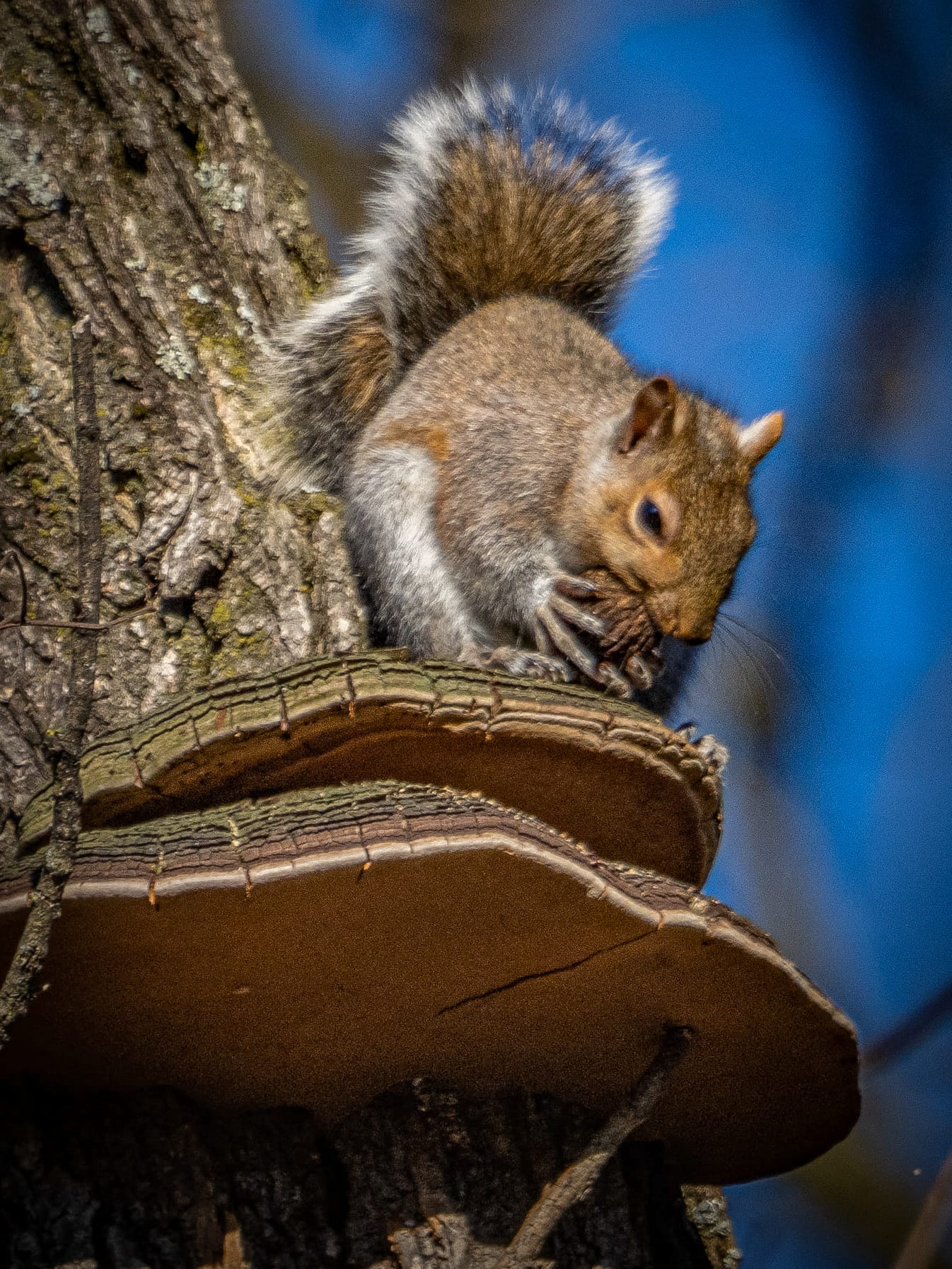
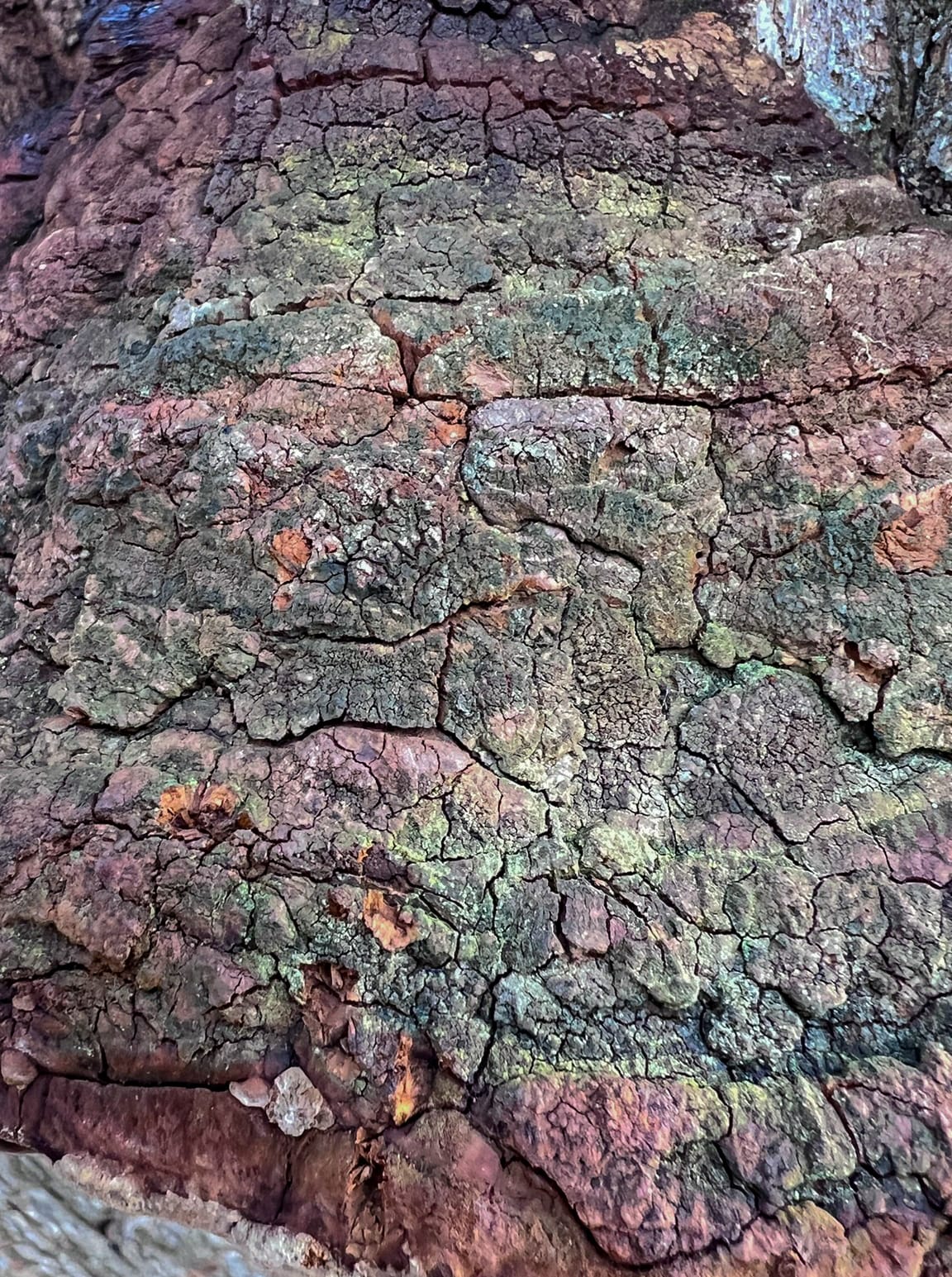
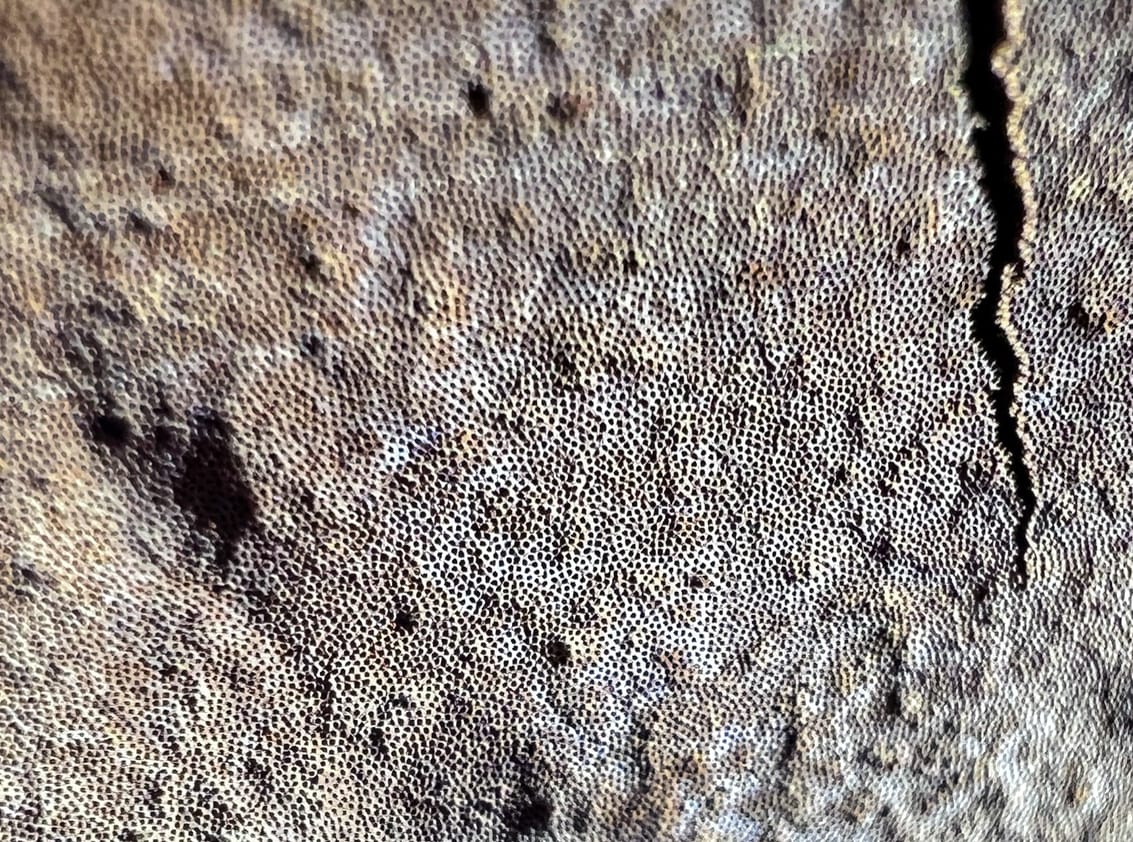
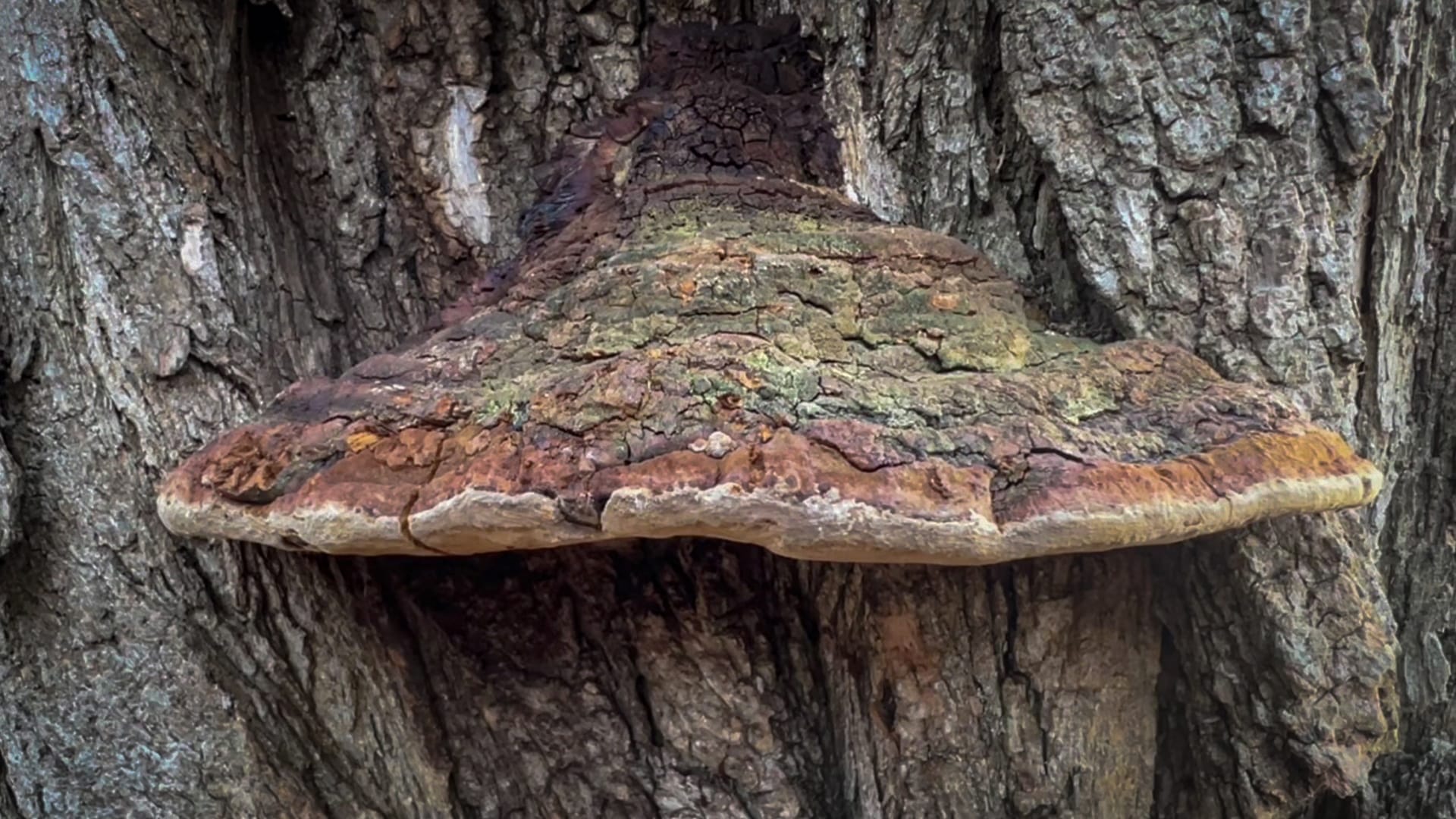
Cracked Cap Polypore is common on the park's Black Locust trees, often used as a perch by Gray Squirrels - Note the annual growth bands, formed where a new layer of tissue is added at the outer edge each year, closeup of the scaly cap with moss, underside with pore structure, typical cracked-cap.
Cracked Cap Polypore (Fulvifomes robiniae) is a perennial, woody bracket fungus most often seen at the park on living black locust trees. Woody, hoof-shaped conks can live for many years, adding a new inner layer of tubes annually. The brackets are thick, dark brown to black, and develop cracks as they age. Infection typically begins through wounds, branch stubs, or damaged areas of the tree. The fungus is both a weak parasite and a decomposer, causing the heartwood to rot. While cracked-cap polypore rarely kills trees outright, the decaying heartwood weakens the tree’s structural integrity.