The Winter Chase

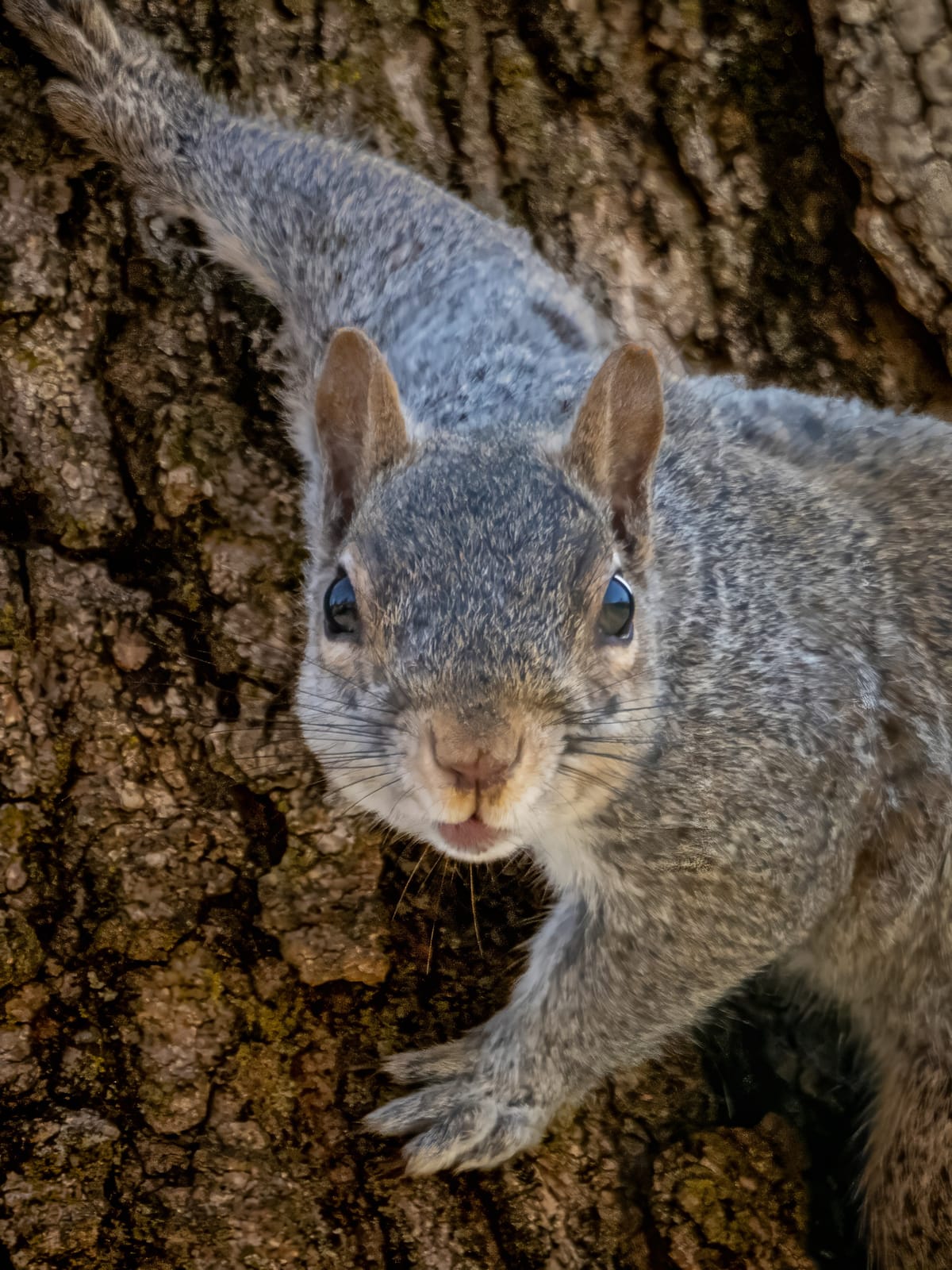
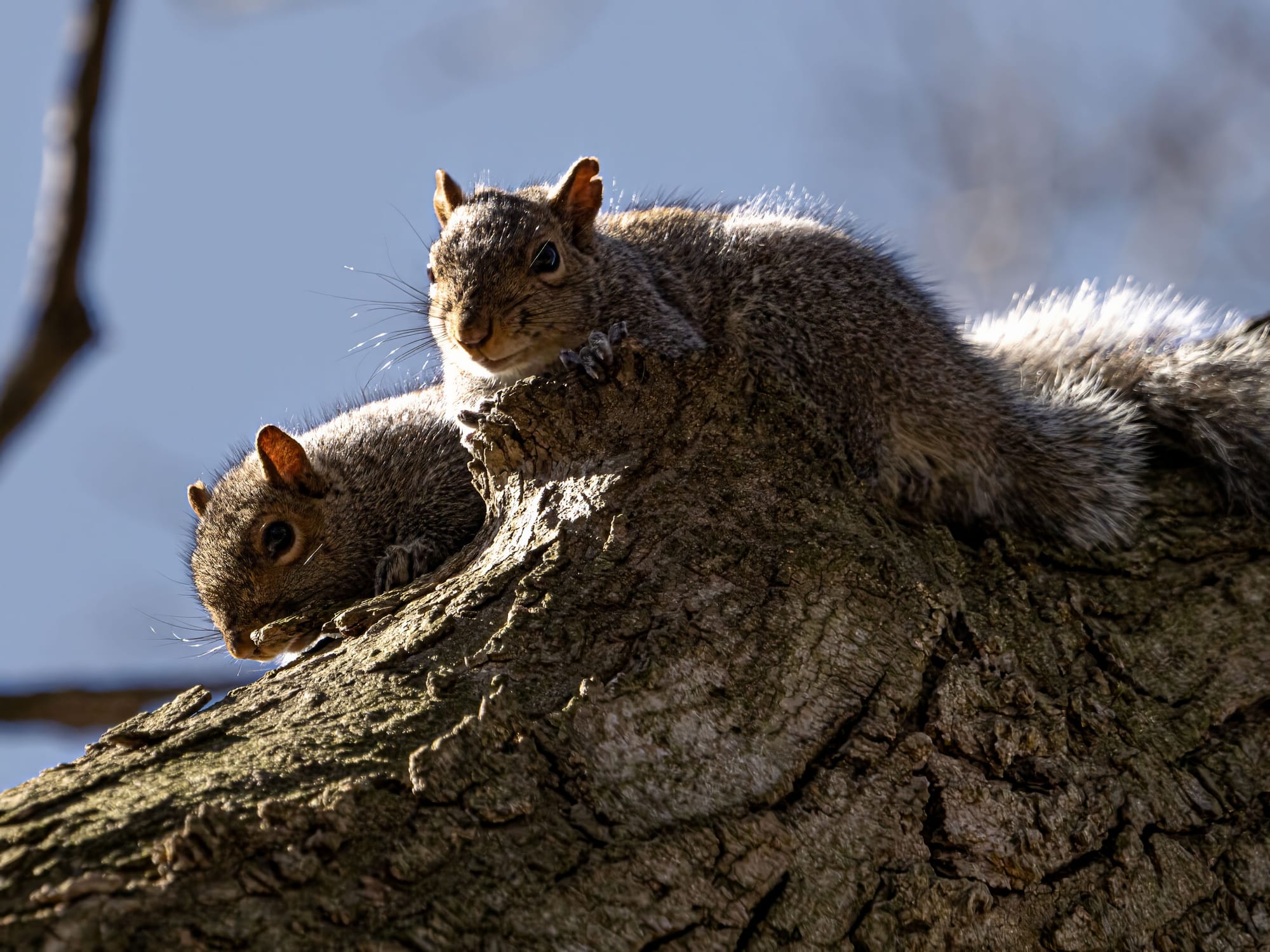
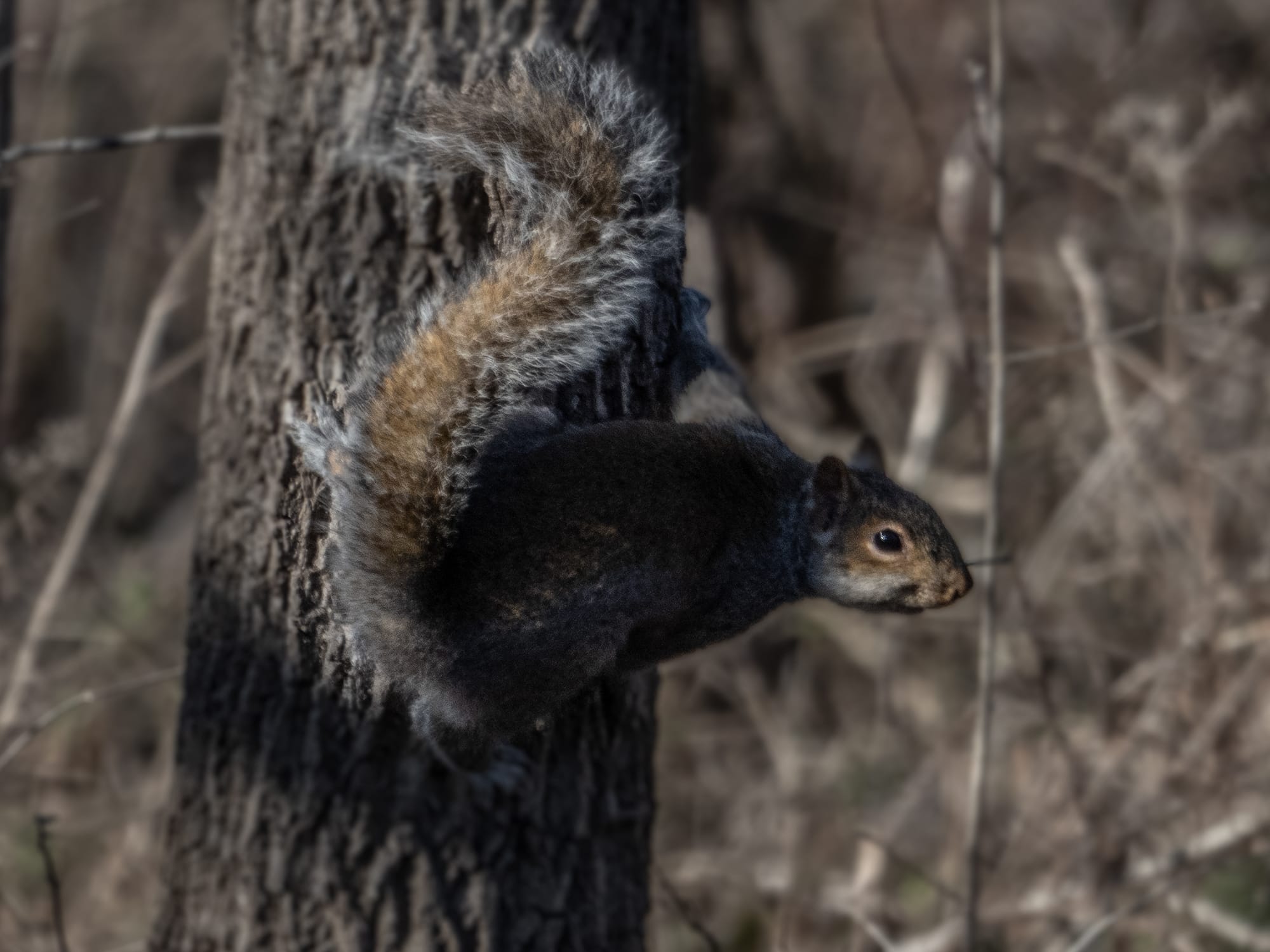
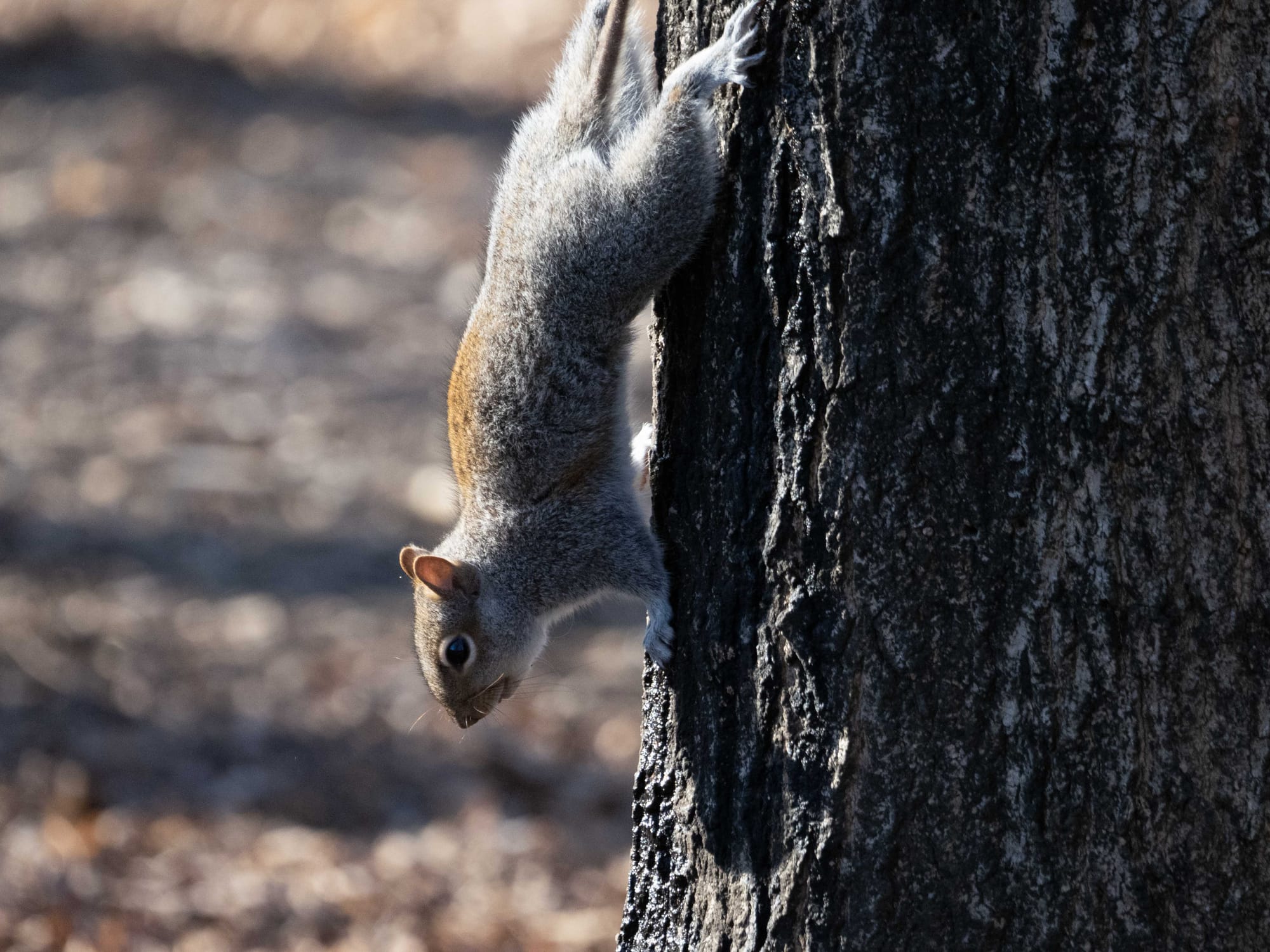
Have you seen gray squirrels playing "chase me" the past week or so all over the park or in the yard? Three or four (or more) squirrels follow the leader spiralling up and down trees, leaping through the forest floor, stopping, turning, and taking off again.
These rapid, repetitive, and wide-ranging antics are all part of the gray squirrel mating chase.
In the late winter and late spring female squirrels in estrus release a scent that attracts males. The estrus lasts less than a day, and the males initate a prolonged chase, that shifts between canopy, understory, and ground.
Males displace one another while looping, making abrupt reversals, and frequent jostling. Footing, endurance, and chance determine which male stays closest. Tails flick, chirps and chuffs fill the air as male squirrels compete.
The female rejects most advances allowing her chosen mate to copulate with her for the few seconds it requires.
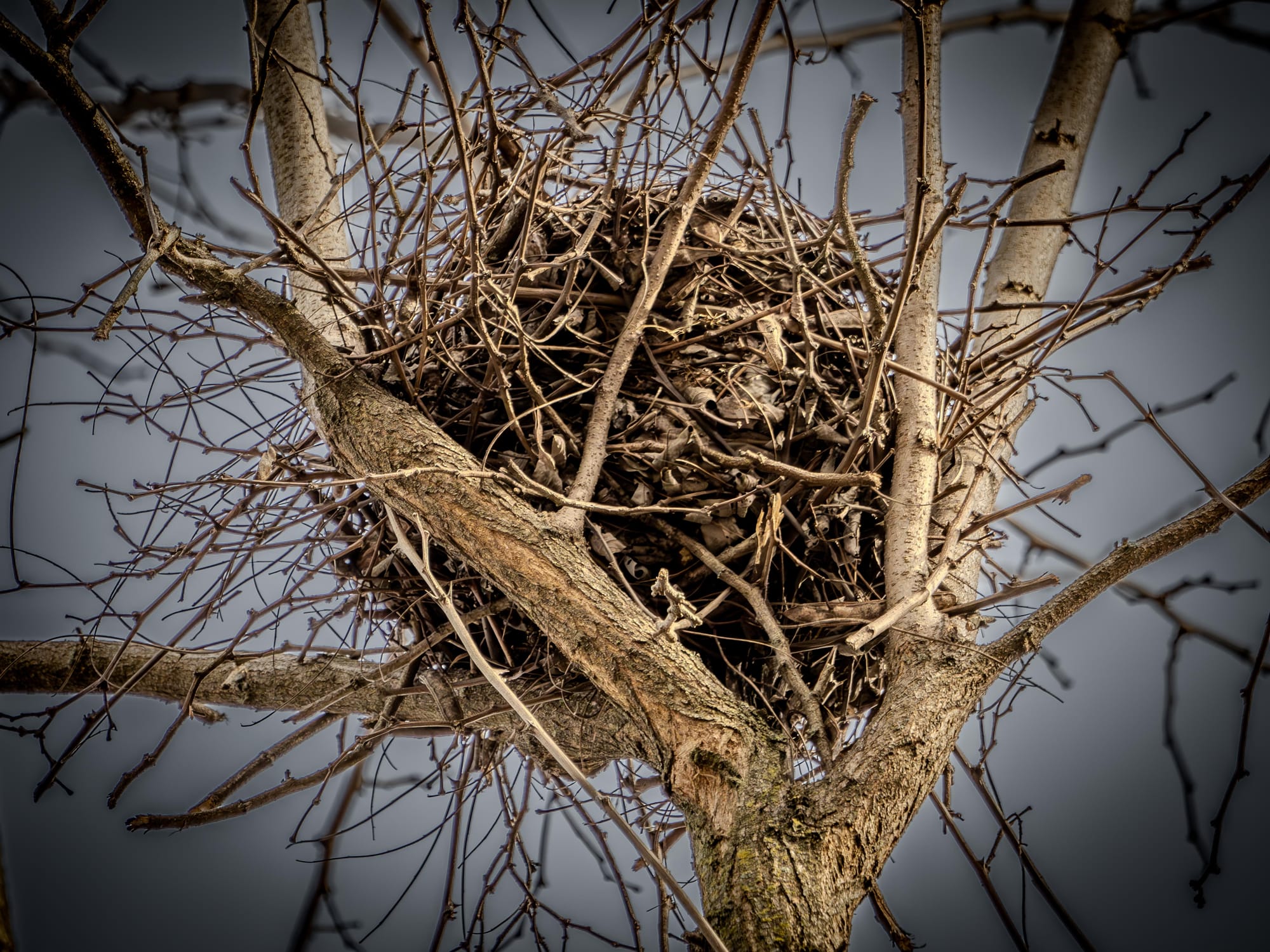
The young from this late-winter breeding are born in February or March inside leaf-lined nests (dreys) or tree cavities. In April and May cautious, clumsy juveniles begin to emerge.
There's a second breeding period from May through June. The same chases are happening out of sight behind the leaves. The young are born in June or July and emerge in August and September.
The result won't be visible for weeks or months, but the winter chase begins a sequence of events aligned with leaf-out, seed development, and the seasonal rise in available food for the new generation of Squirrels.