Winter Bird Alliances

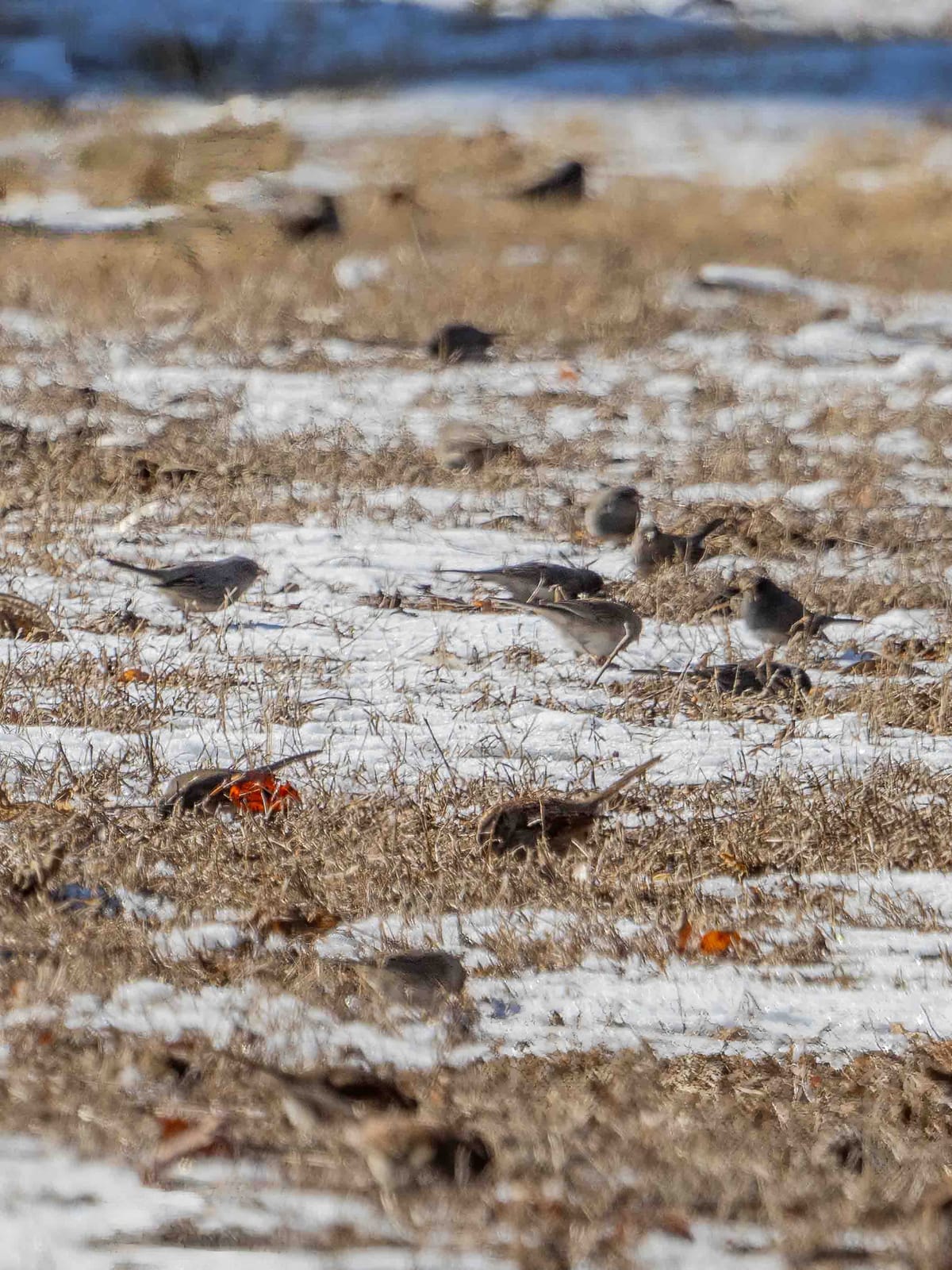
Throughout the winter two distinct “tribes” of foraging birds roam through the park. One travels through the thickets more likely heard than seen, the second (louder and more visible) threads its way through the forest's midstory.
More birds means more eyes keeping a lookout and more chances to find food during the most challenging season of the year. Lone birds would have to use more energy staying alert, and the search for food is more efficient in a group. When one finds food the rest can join in. Each species is going after their own sources of food in their own way, so there's not a lot of competition between them.
Walking the trails of the park in the winter you are sure to hear these alliances maintaining contact with each other but they are not sending and receiving complex messages between species. They are not conscious of cooperating so much as maintaining an awareness of each other. They are not forming social bonds or organized flocks, just sharing space.
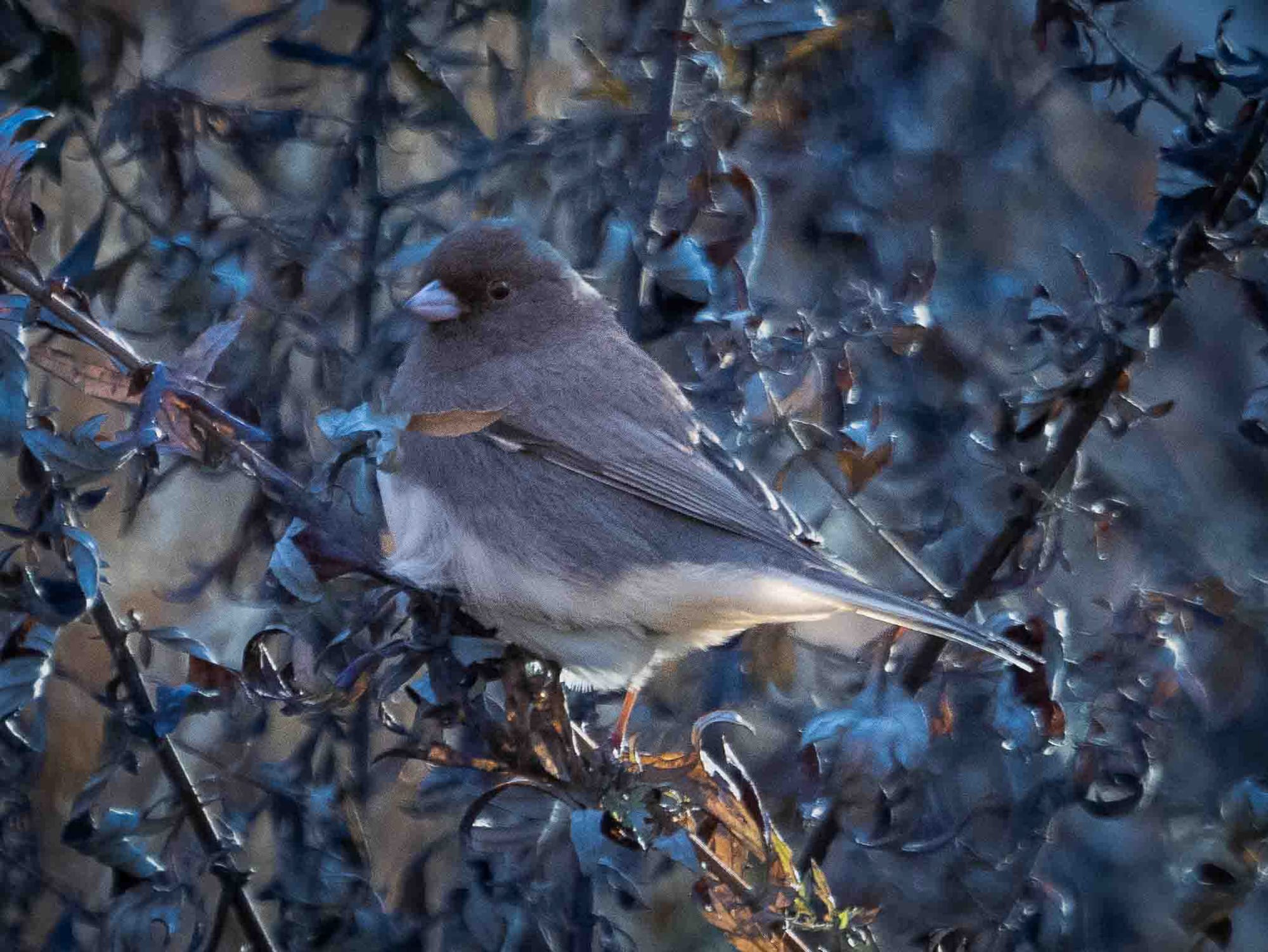
Dark-eyed Juncos
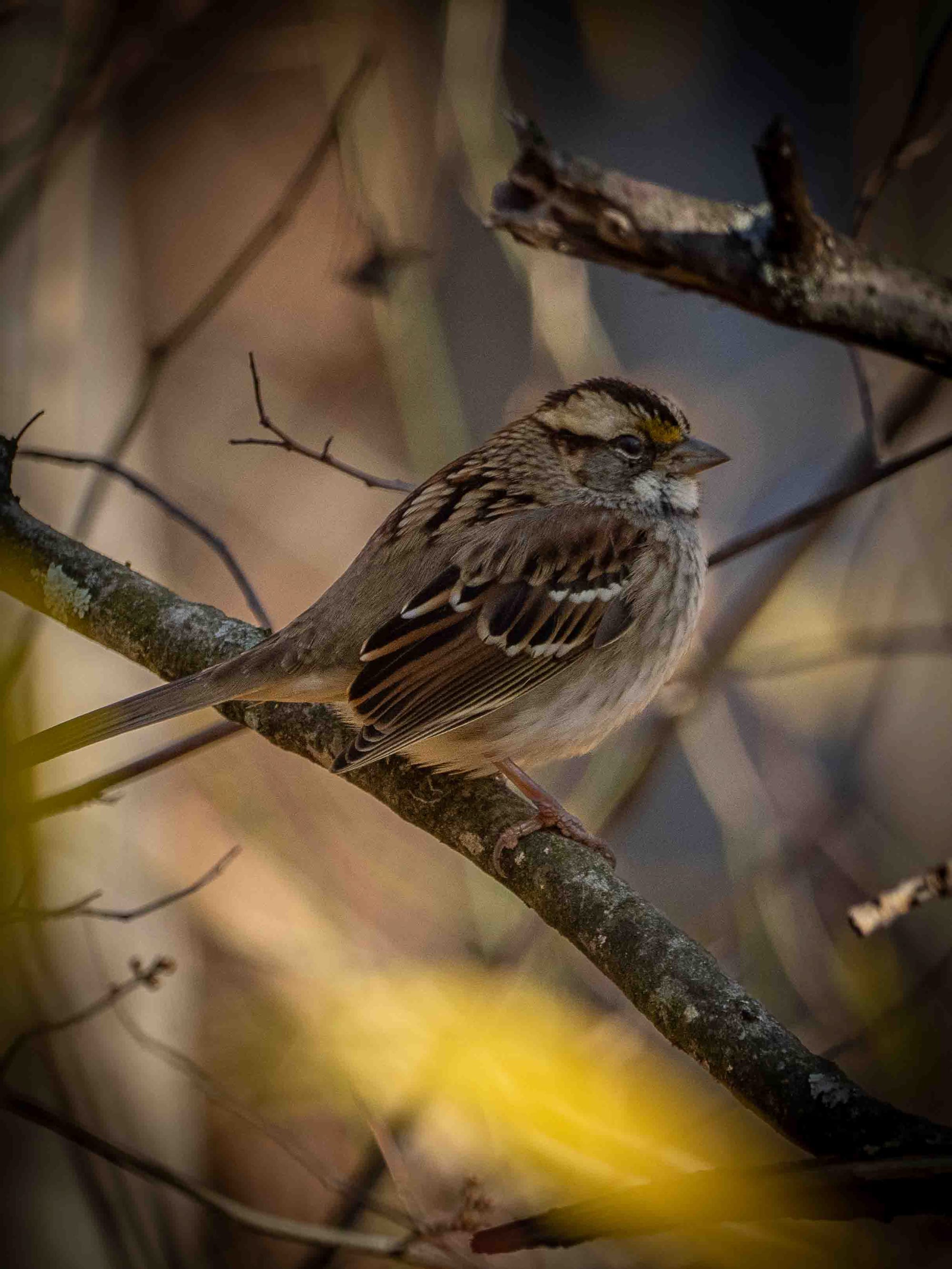
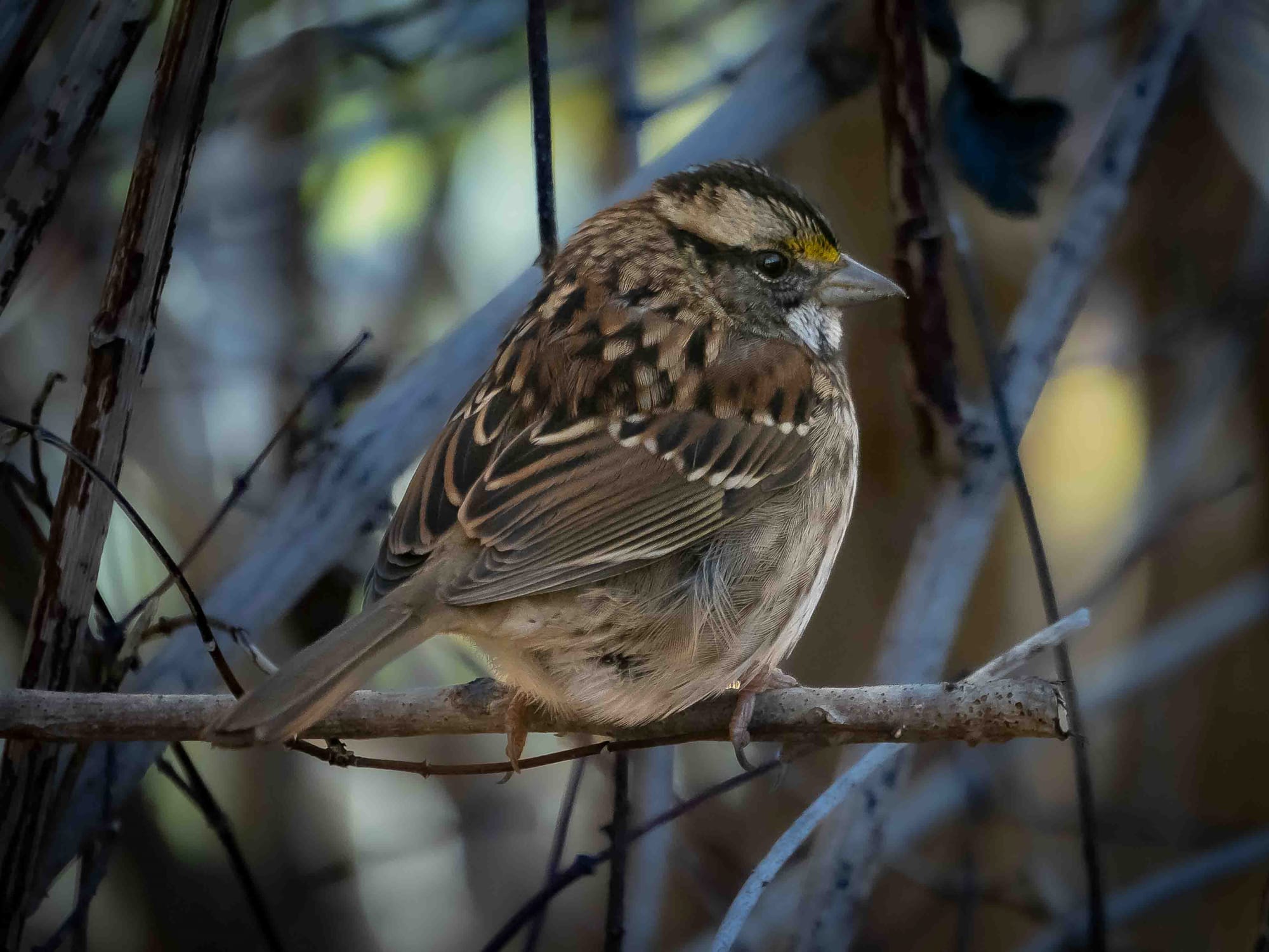
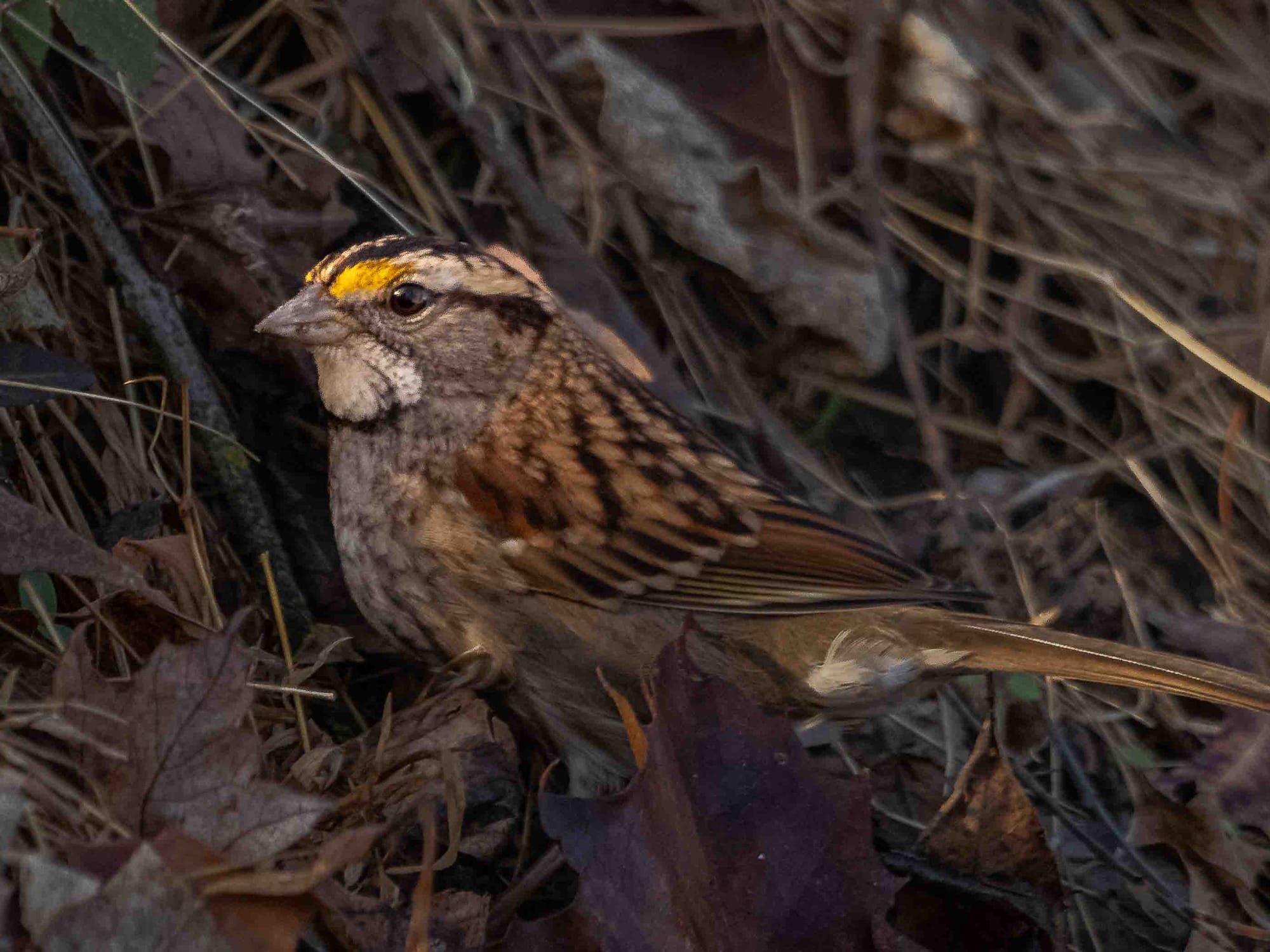
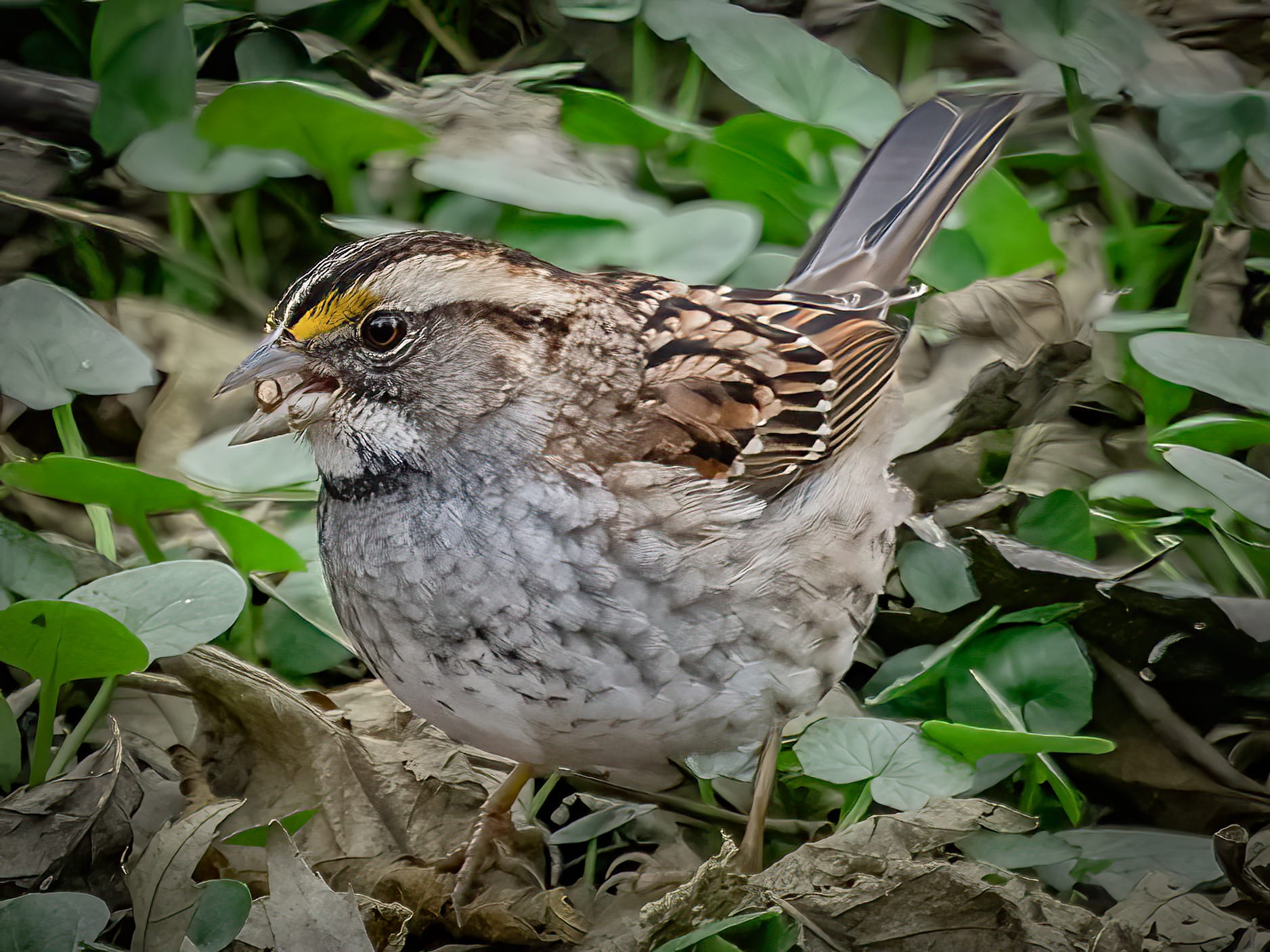
White-throated Sparrows
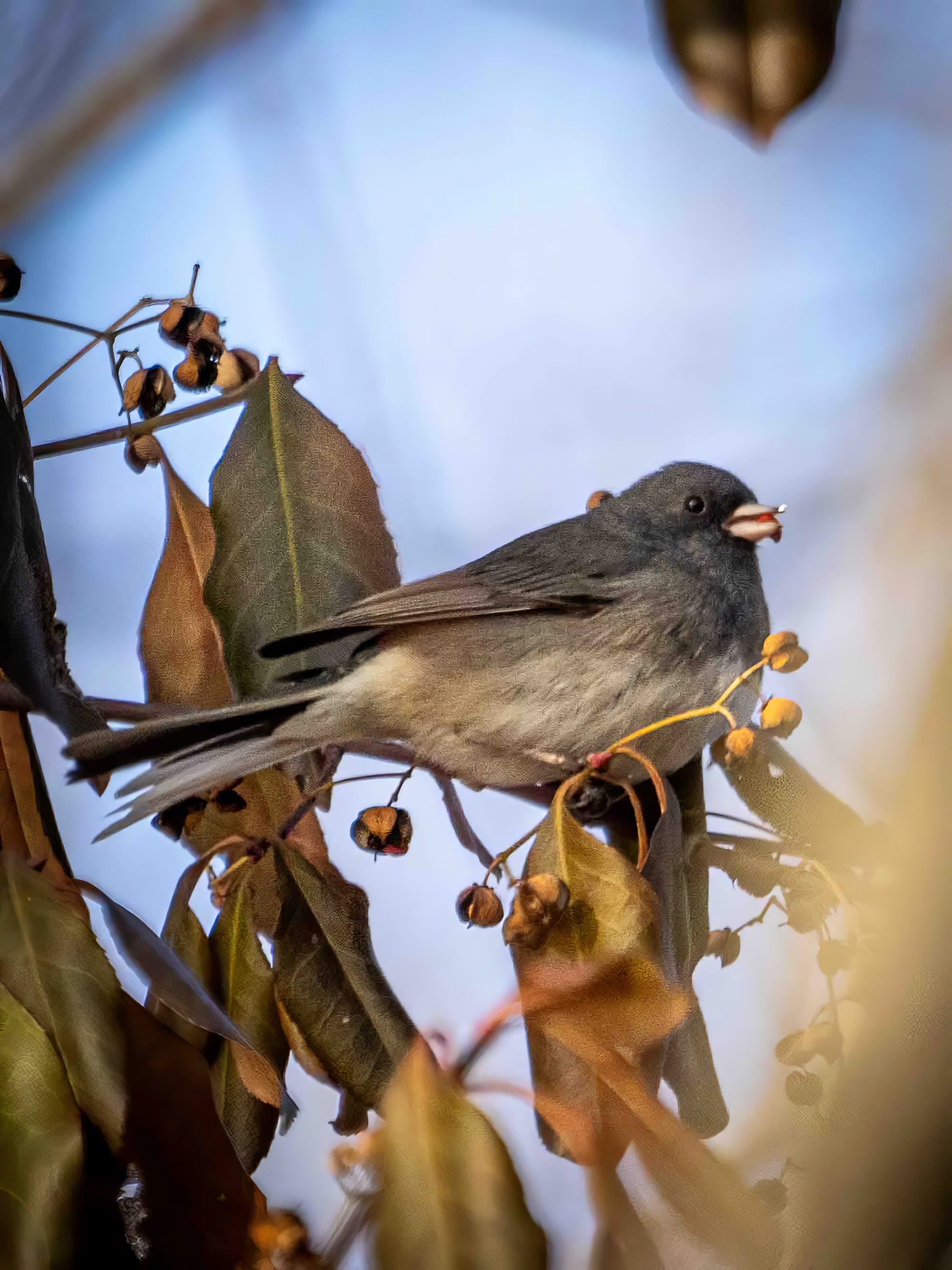
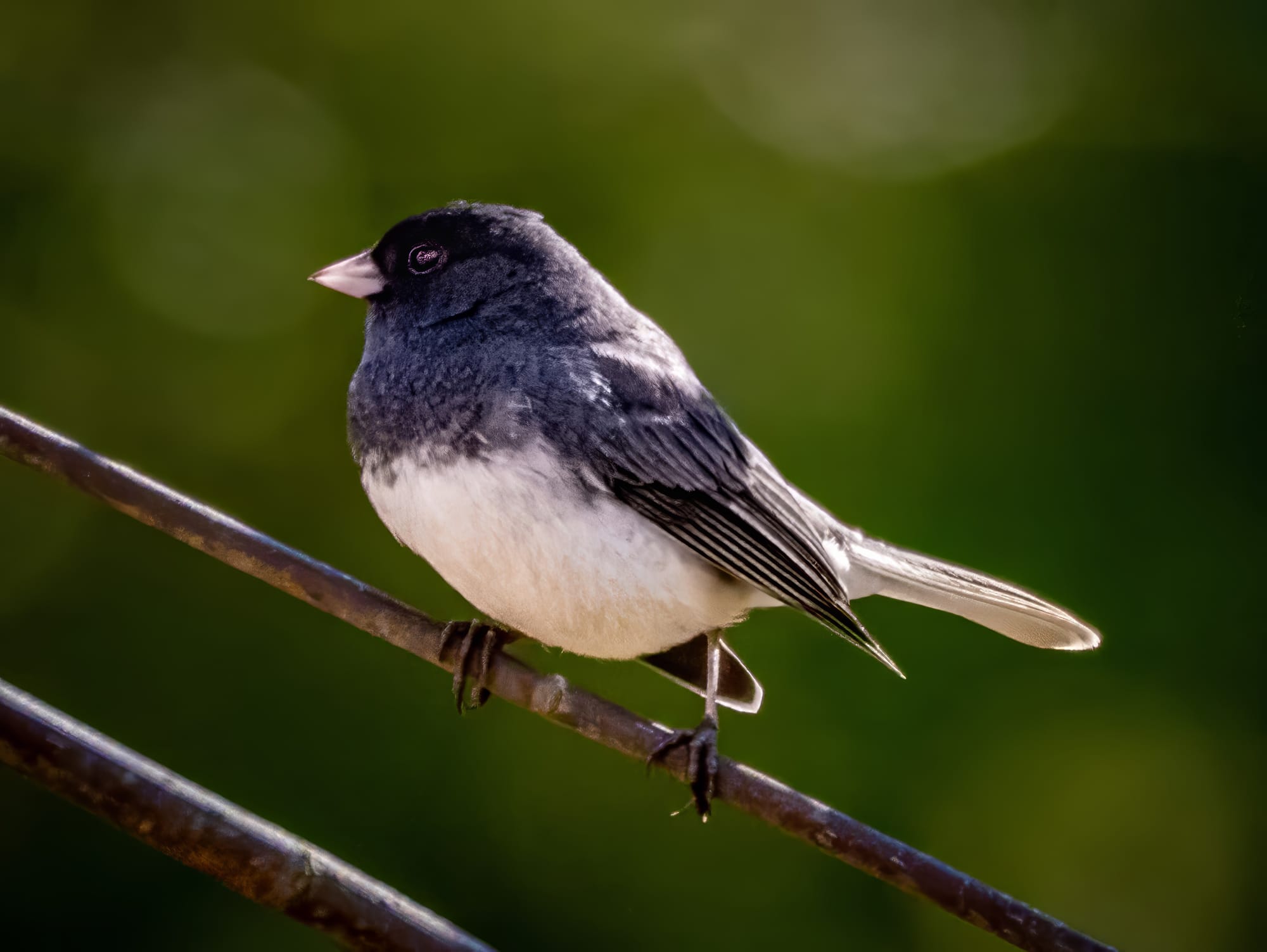
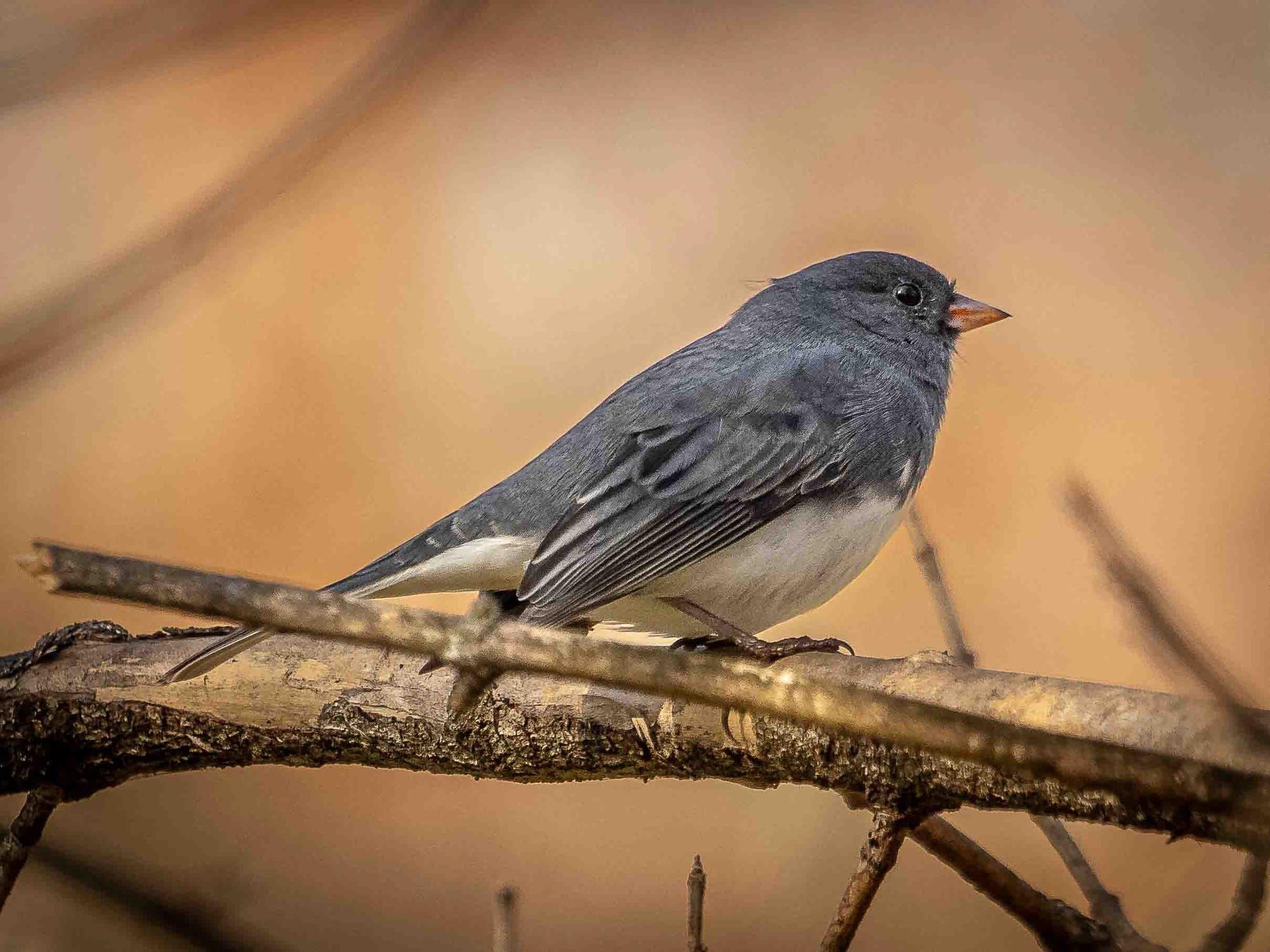
The first “tribe” takes shape when White-throated Sparrows and the eastern Slate-colored form of the Dark-eyed Junco move south from their northern breeding grounds. Throughout the winter they will comb through brushy woodland edges and mixed thickets close to the ground where food is abundant. They spend the day hopping and scratching leaf litter to uncover seeds, fallen fruits, and occasional invertebrates. They stick to sheltered thickets of shrubs and tangled stems to avoid predators and stay out of the wind.
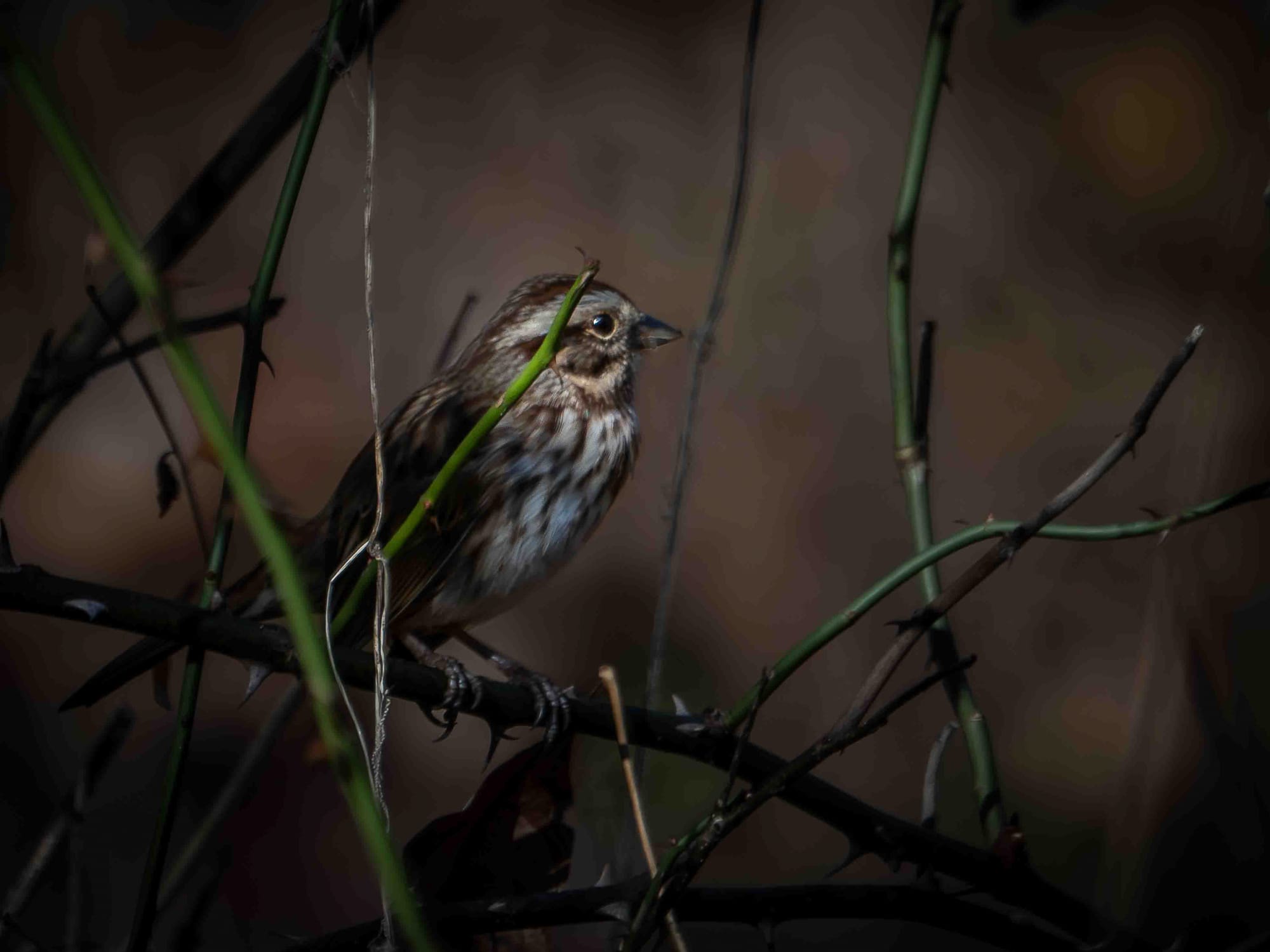
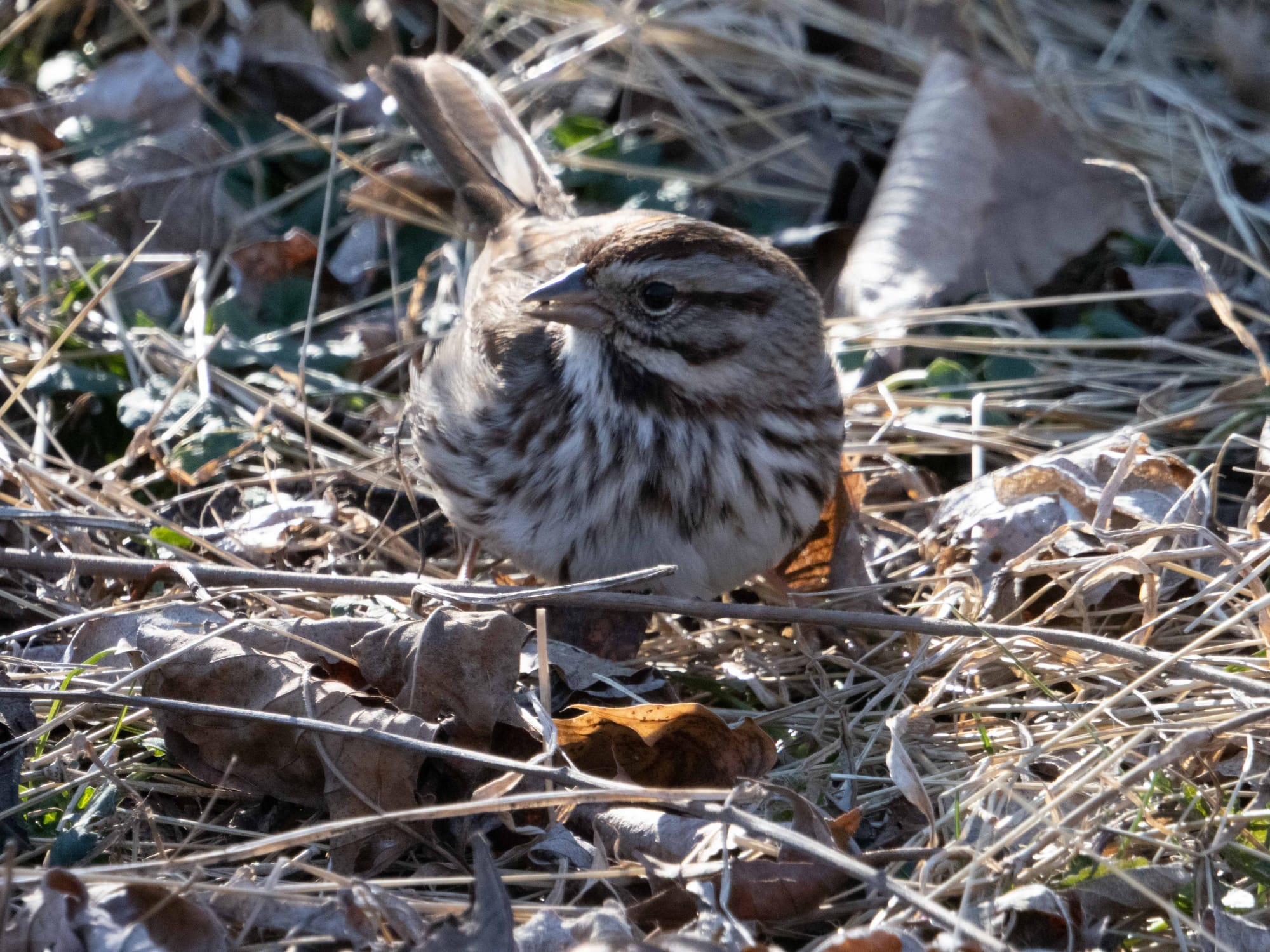
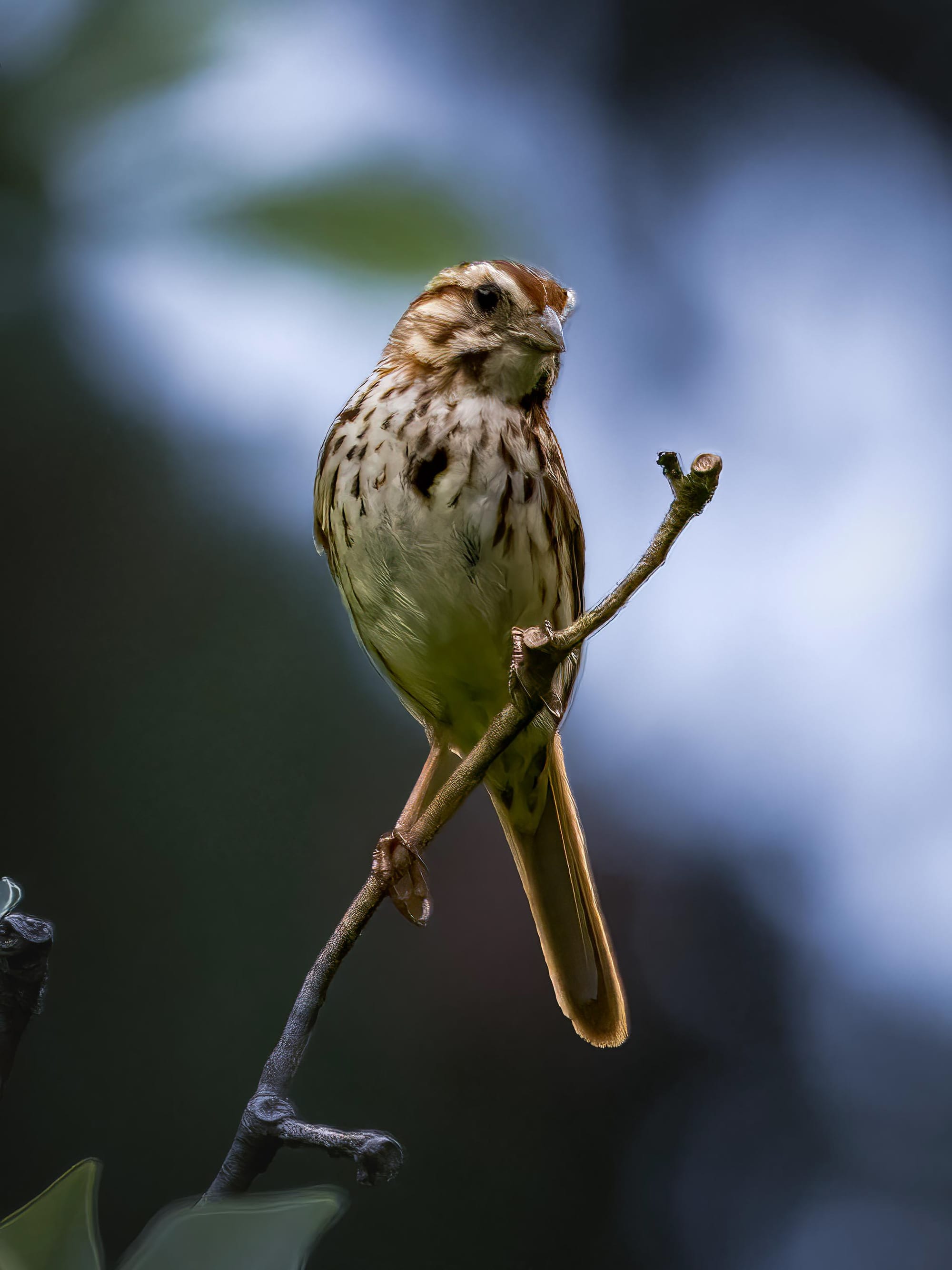
Song Sparrows
Song Sparrows are year round inhabitants of the park who share space with the visiting sparrows and juncos. Song Sparrows frequently perch just above the ground layer to watch for danger before returning to forage.
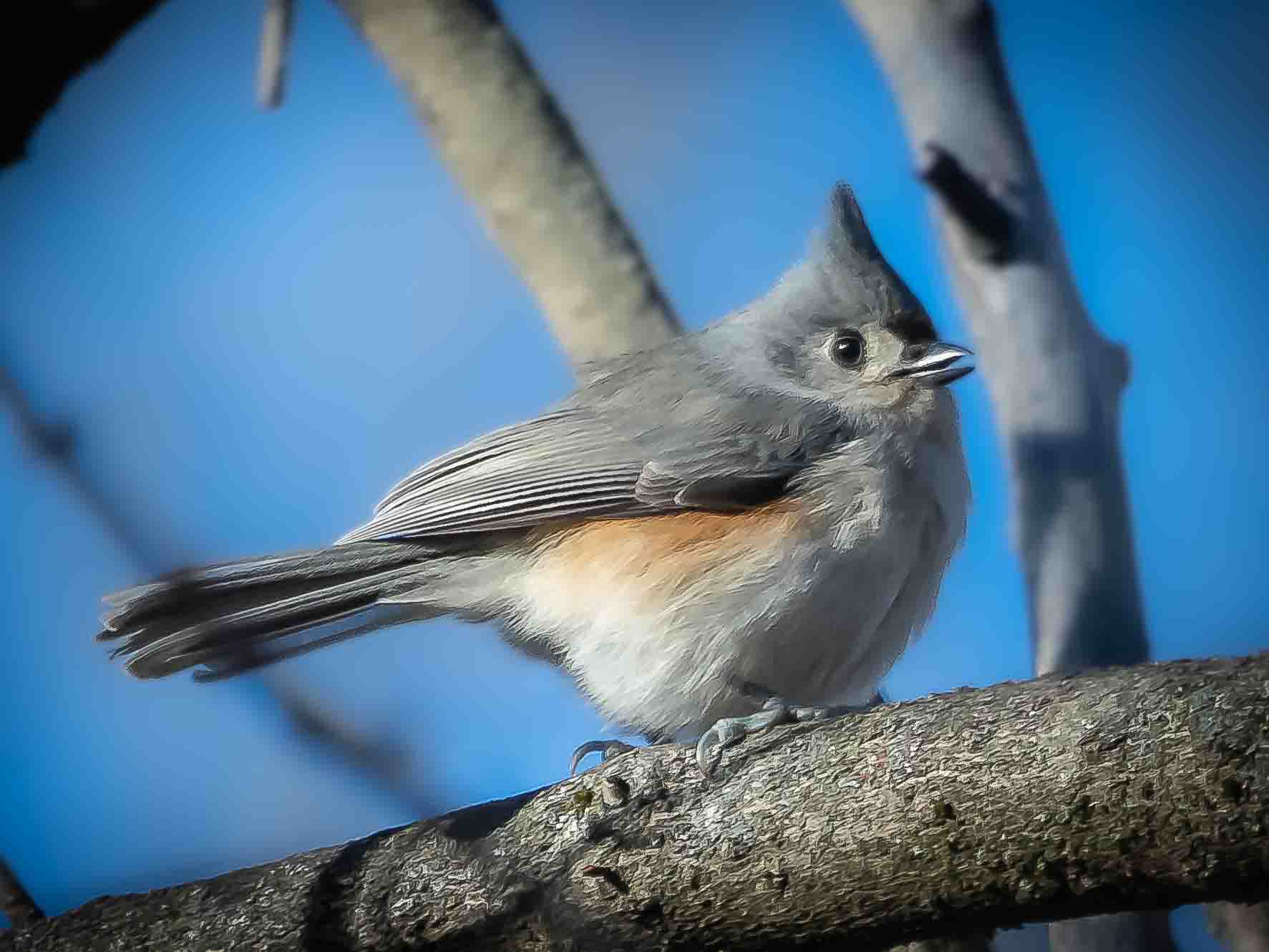
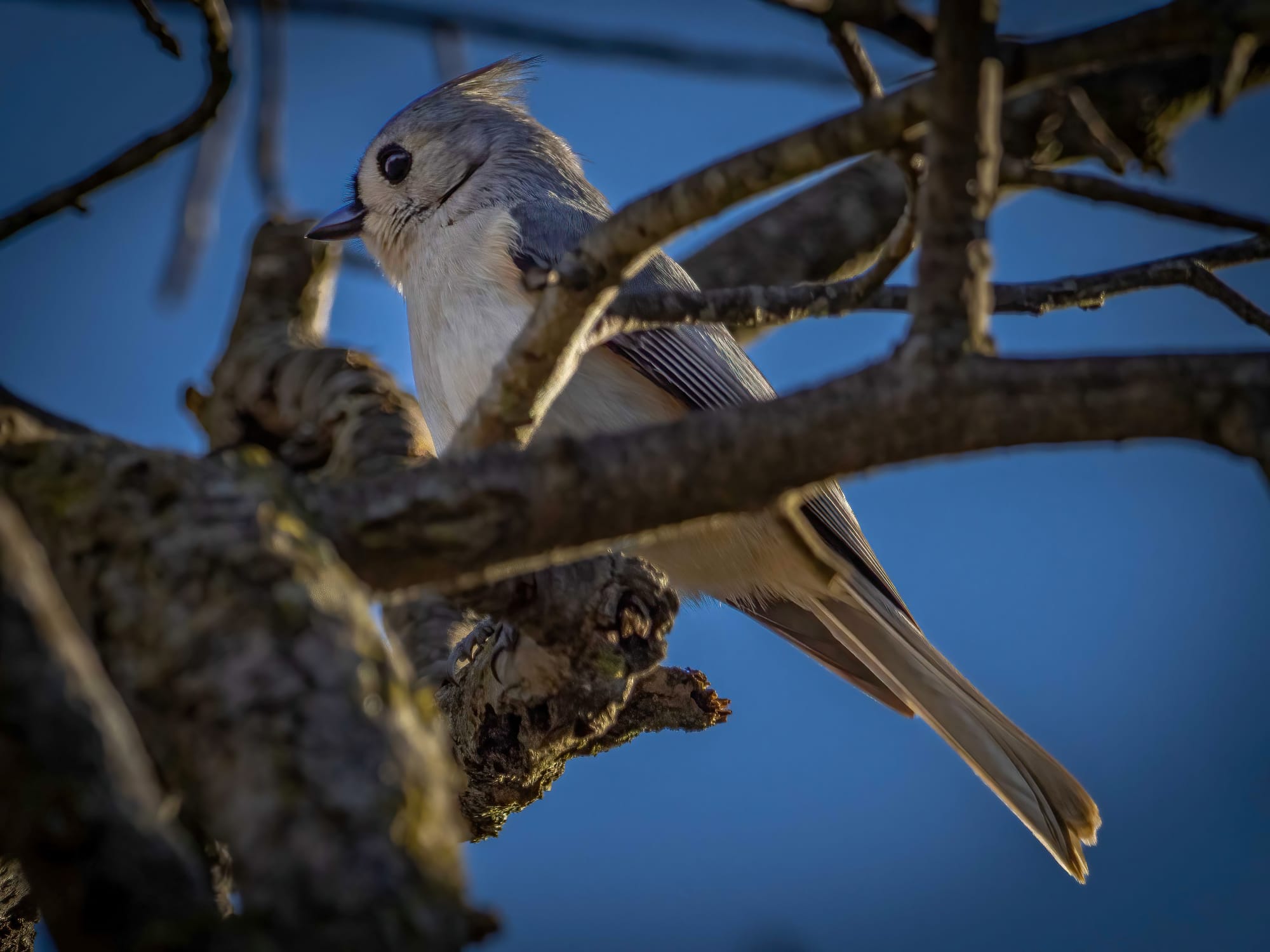
Tufted Titmice
Chickadees and Tufted Titmice are usually at the vanguard of the second group. They can be seen moving through the forest’s middle layer where shrubs, young trees, and lower branches live in filtered light between the ground plants and the tall canopy above.
As they travel the Chickadees inspect bud scales, curled leaves, and bark seams where wintering insects shelter.
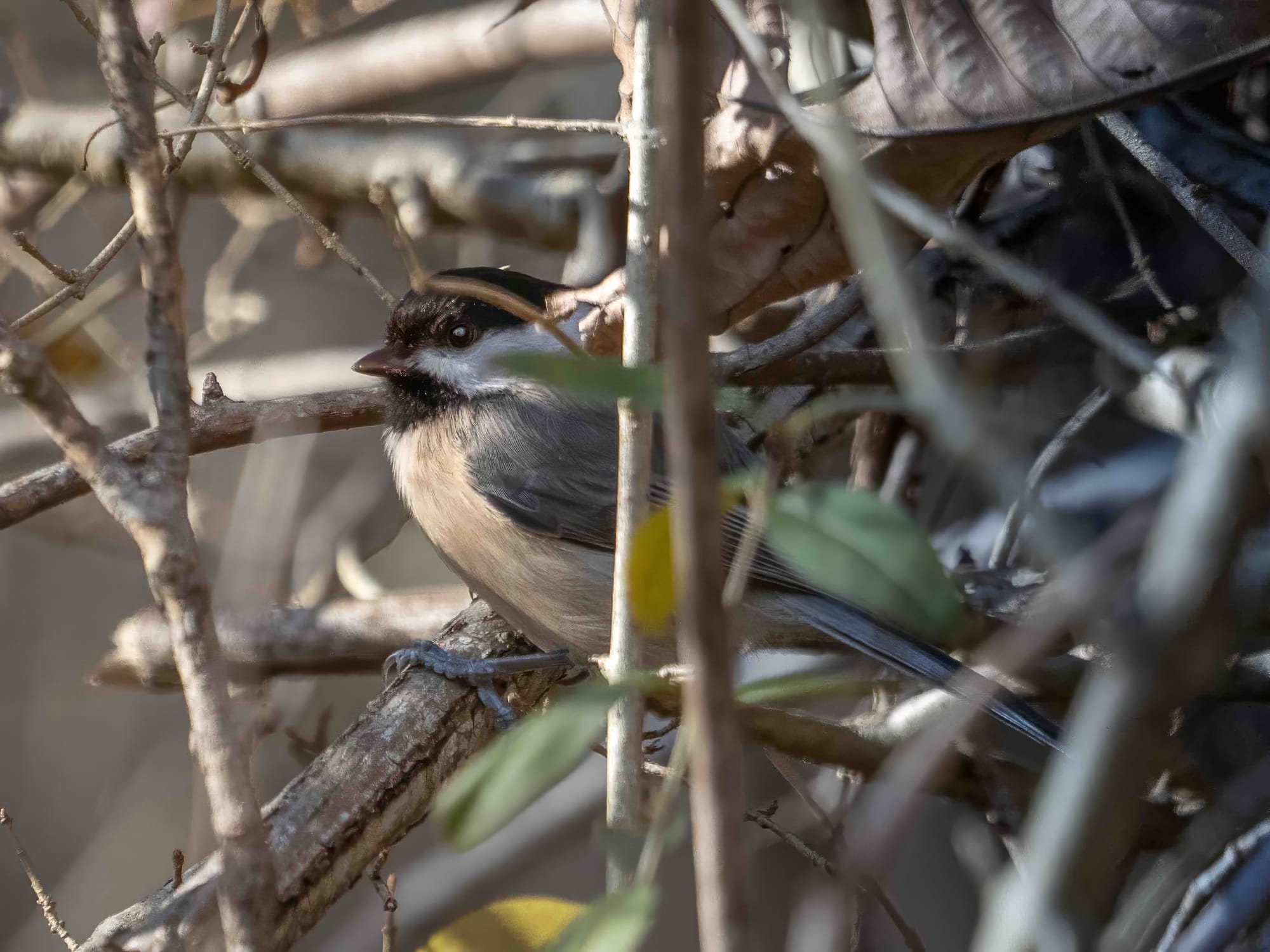
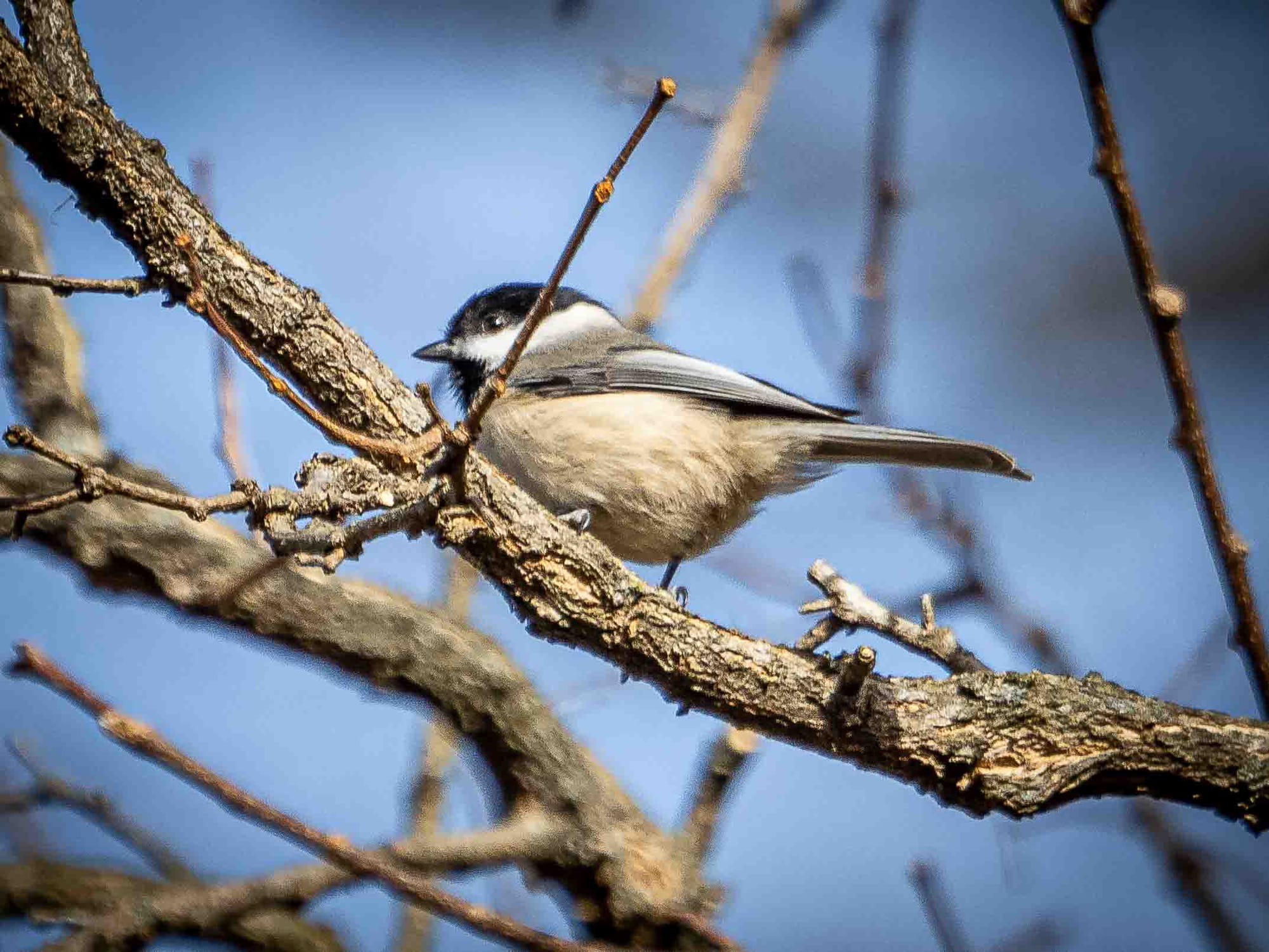
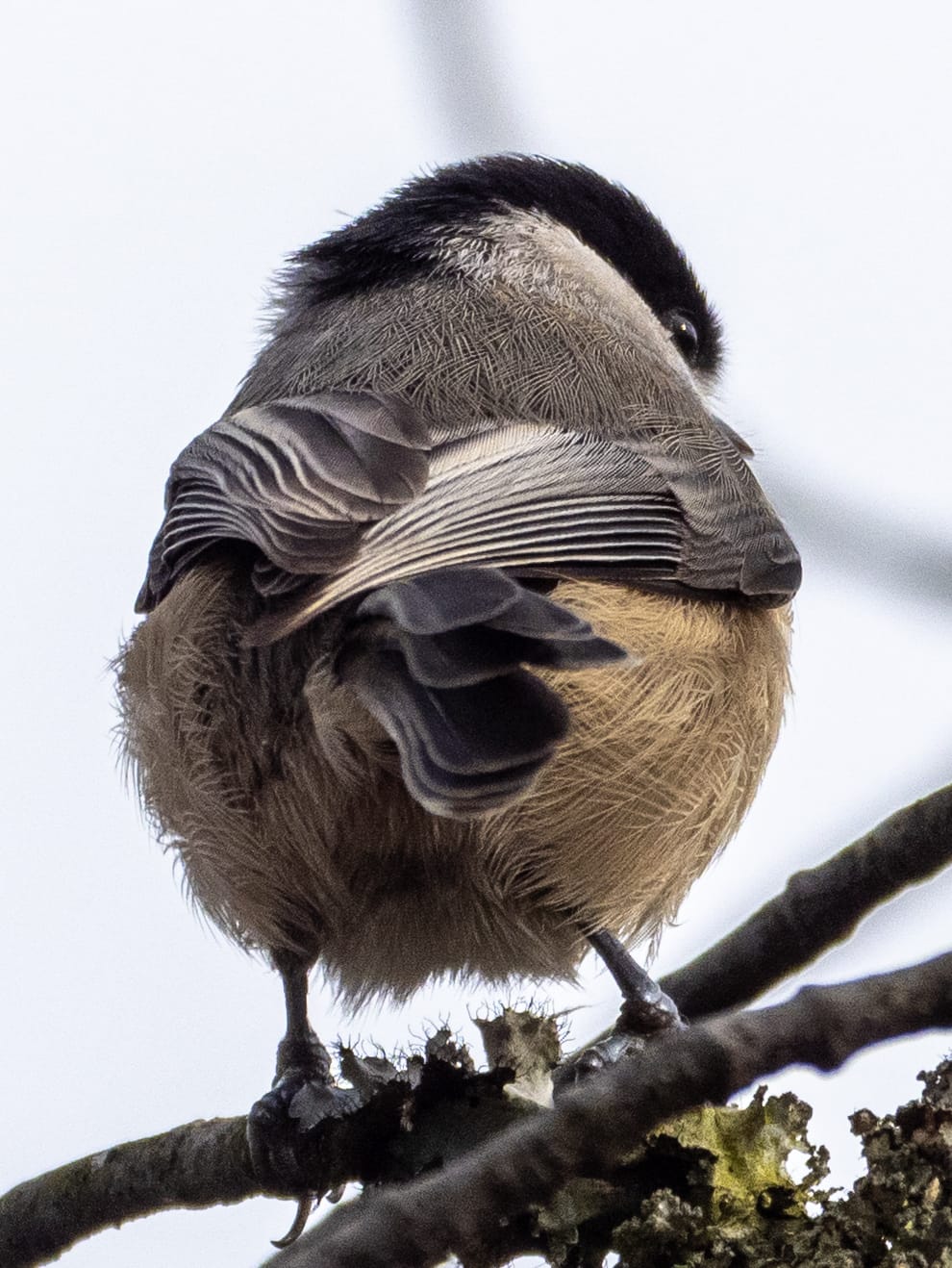
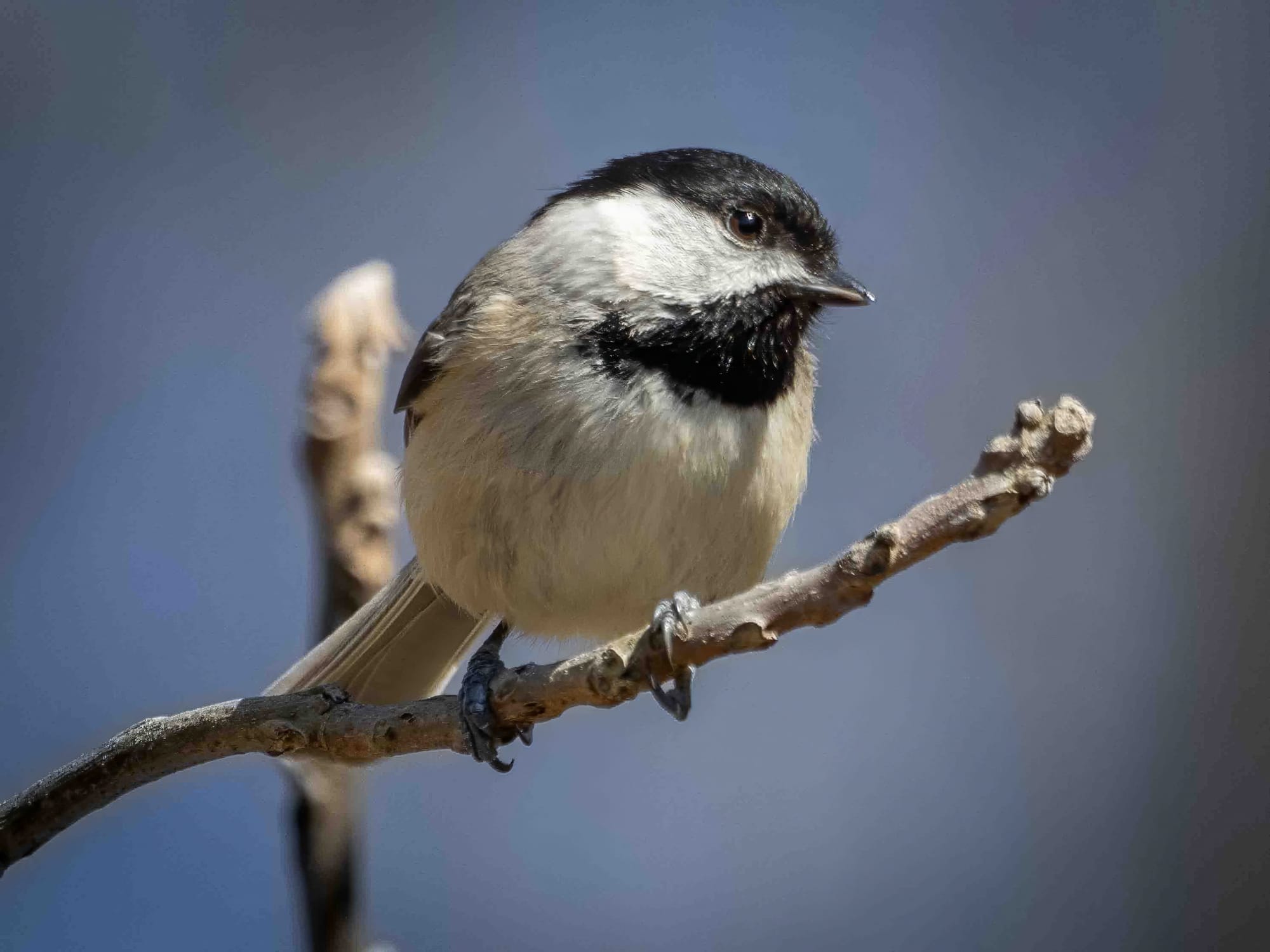
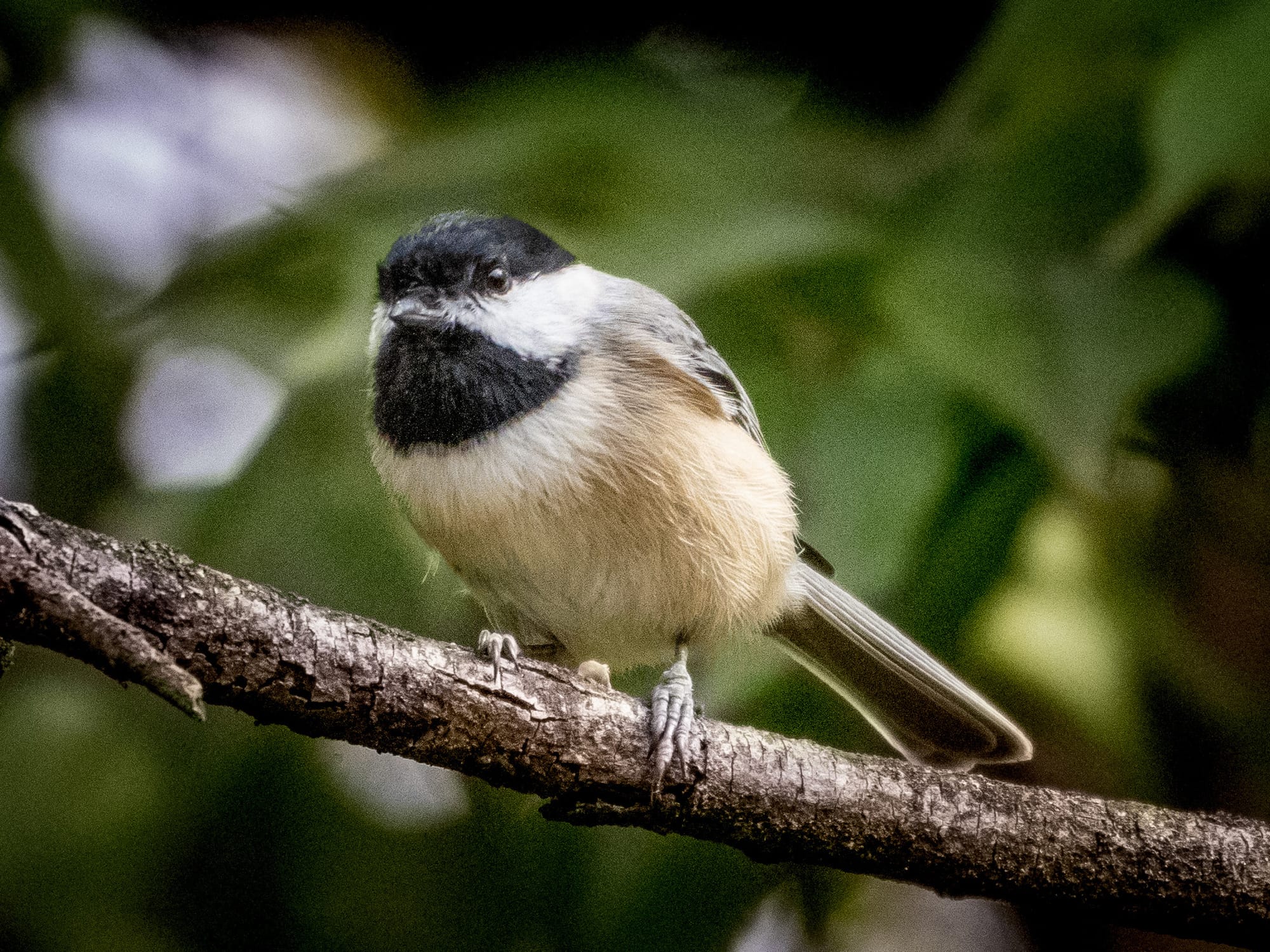
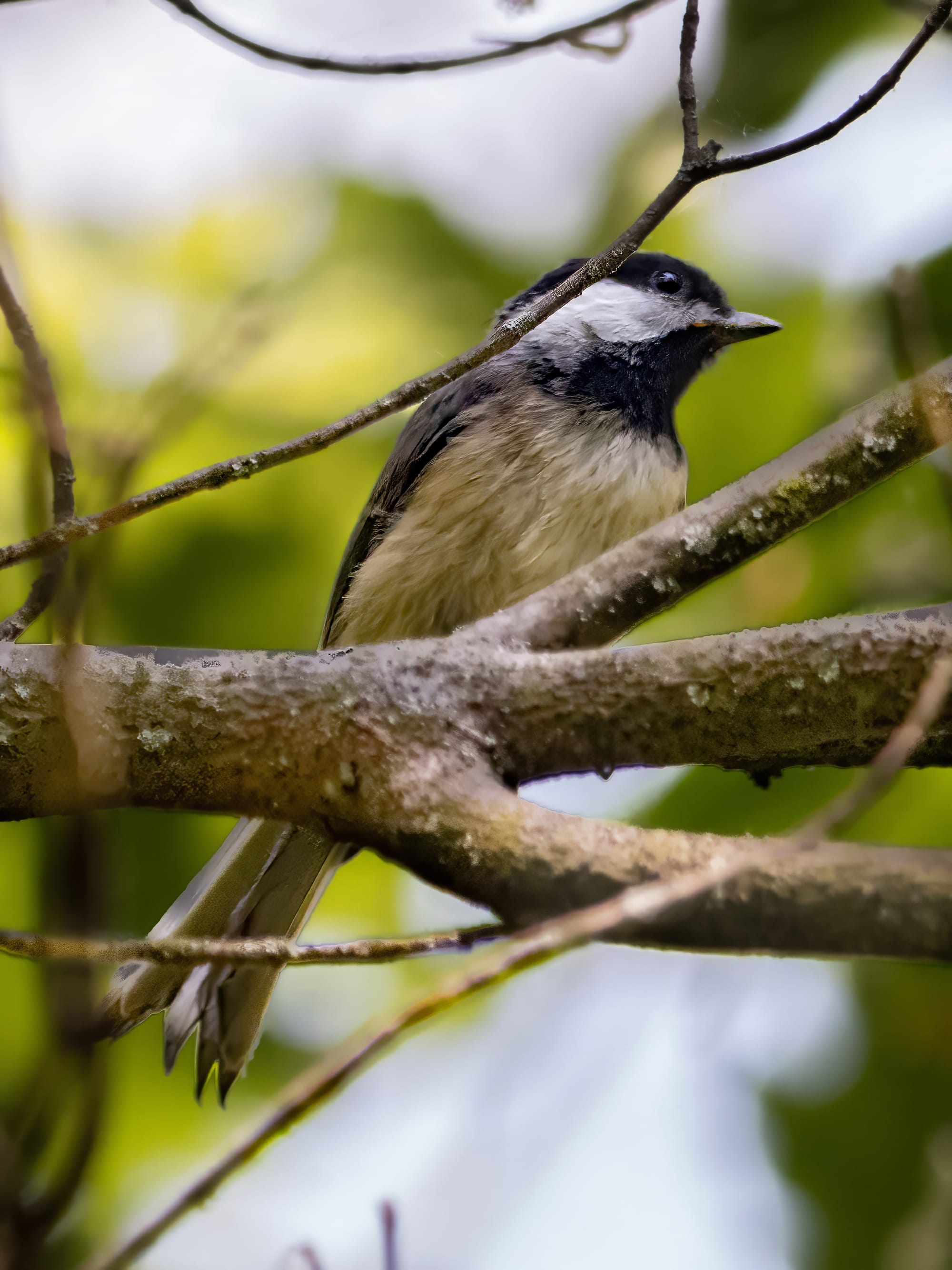
Chickadees
We live where the southernmost range of Black Capped Chickadee overlaps the northernmost extent of the Carolina Chickadee, and the two can produce hybrids. Carolina Chickadee calls rise a bit higher and flow more quickly; the spacing softens to something of a southern drawl. Black Capped Chickadees call with a bright, well-defined tone that has a Yankee crispness. I can’t often tell them apart myself, but a Chickadee is a Chickadee - bold yet always on the watch, moving fast, all business.
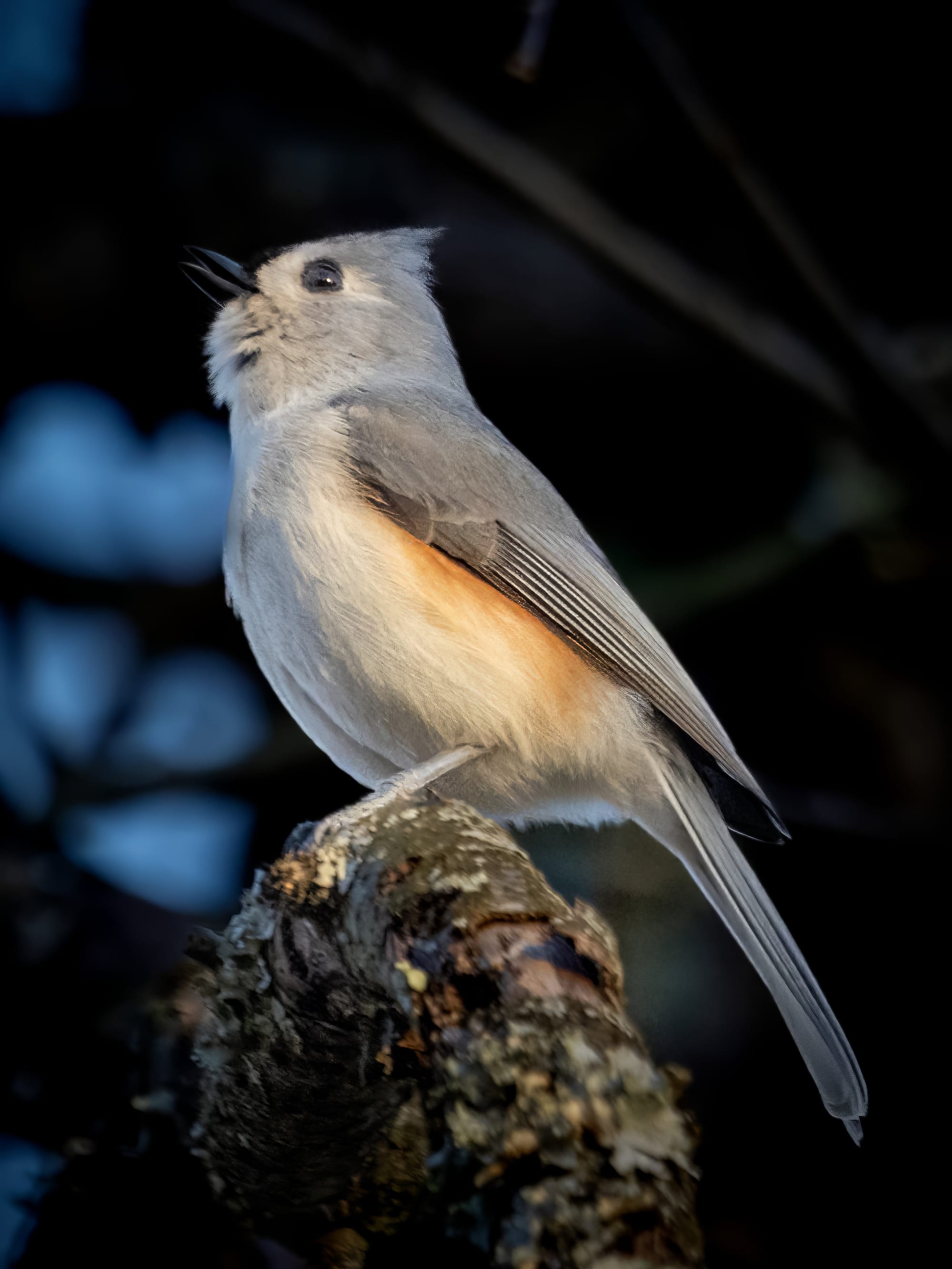
Tufted Titmice prefer the higher branches of the mid-canopy where they investigate galls, bark crevices, and clumps of dead leaves that hold dormant larvae. Their clear, piercing calls signal nearby chickadees and the group stays loosely together as they move through the forest.
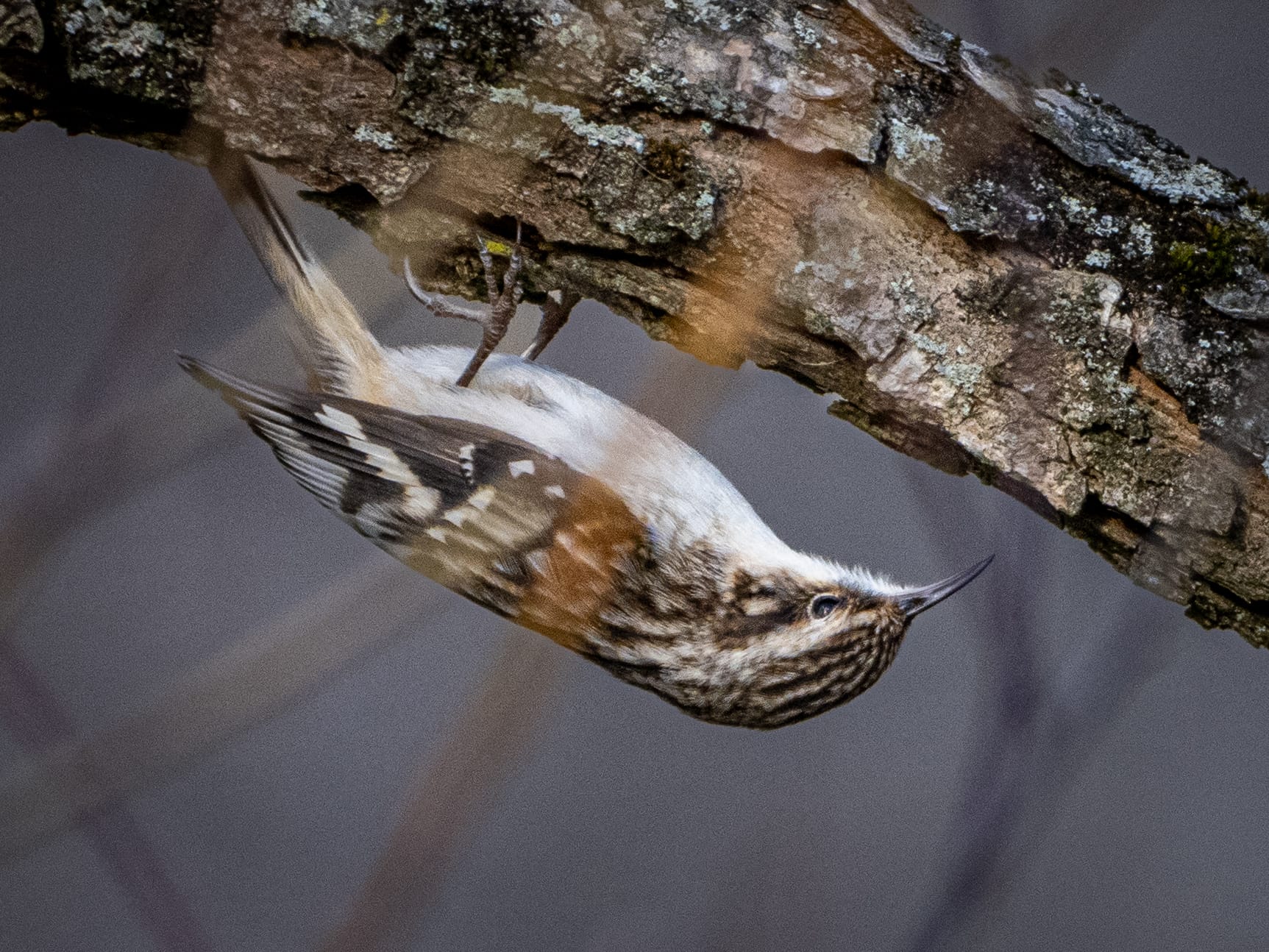
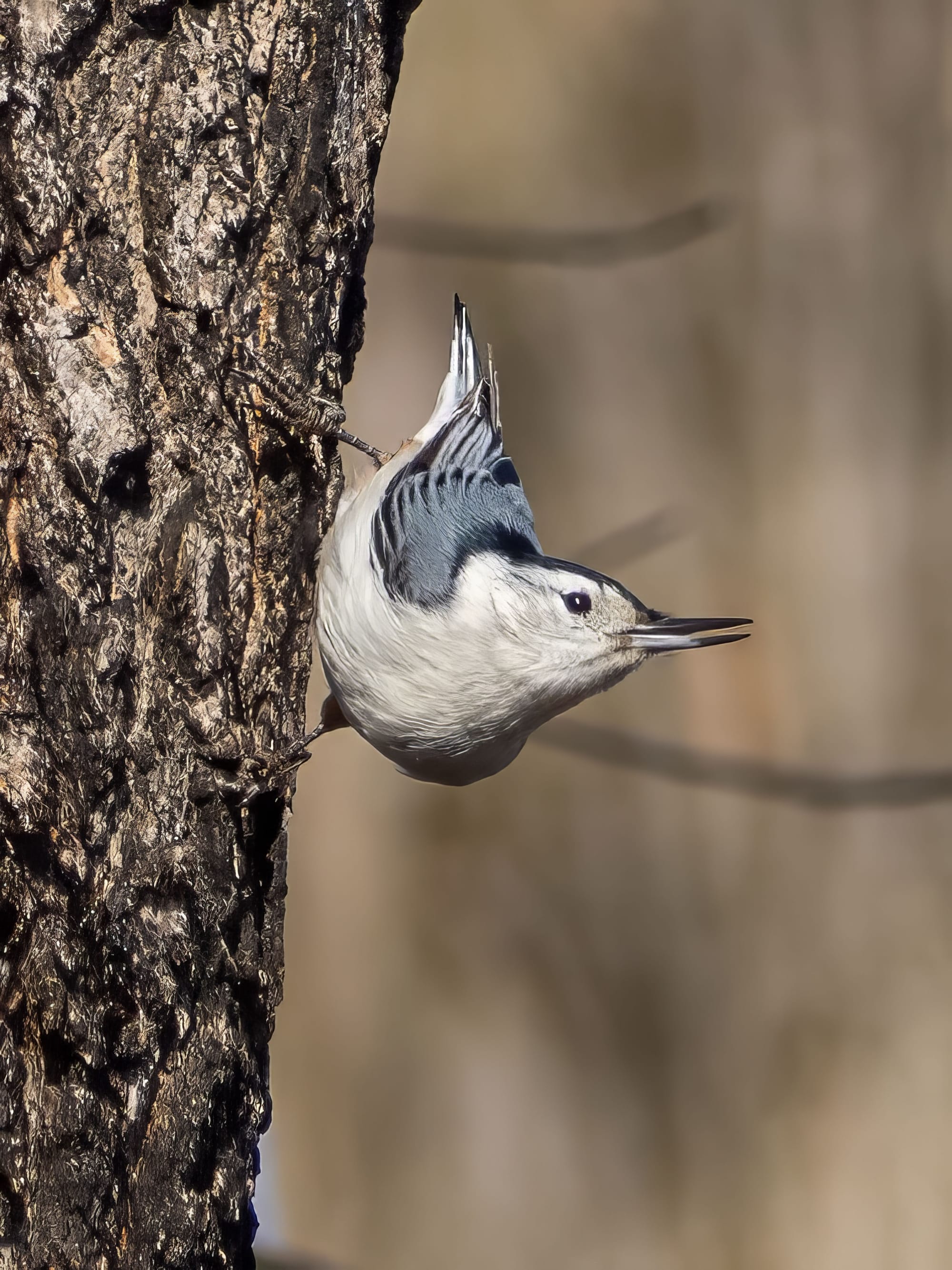
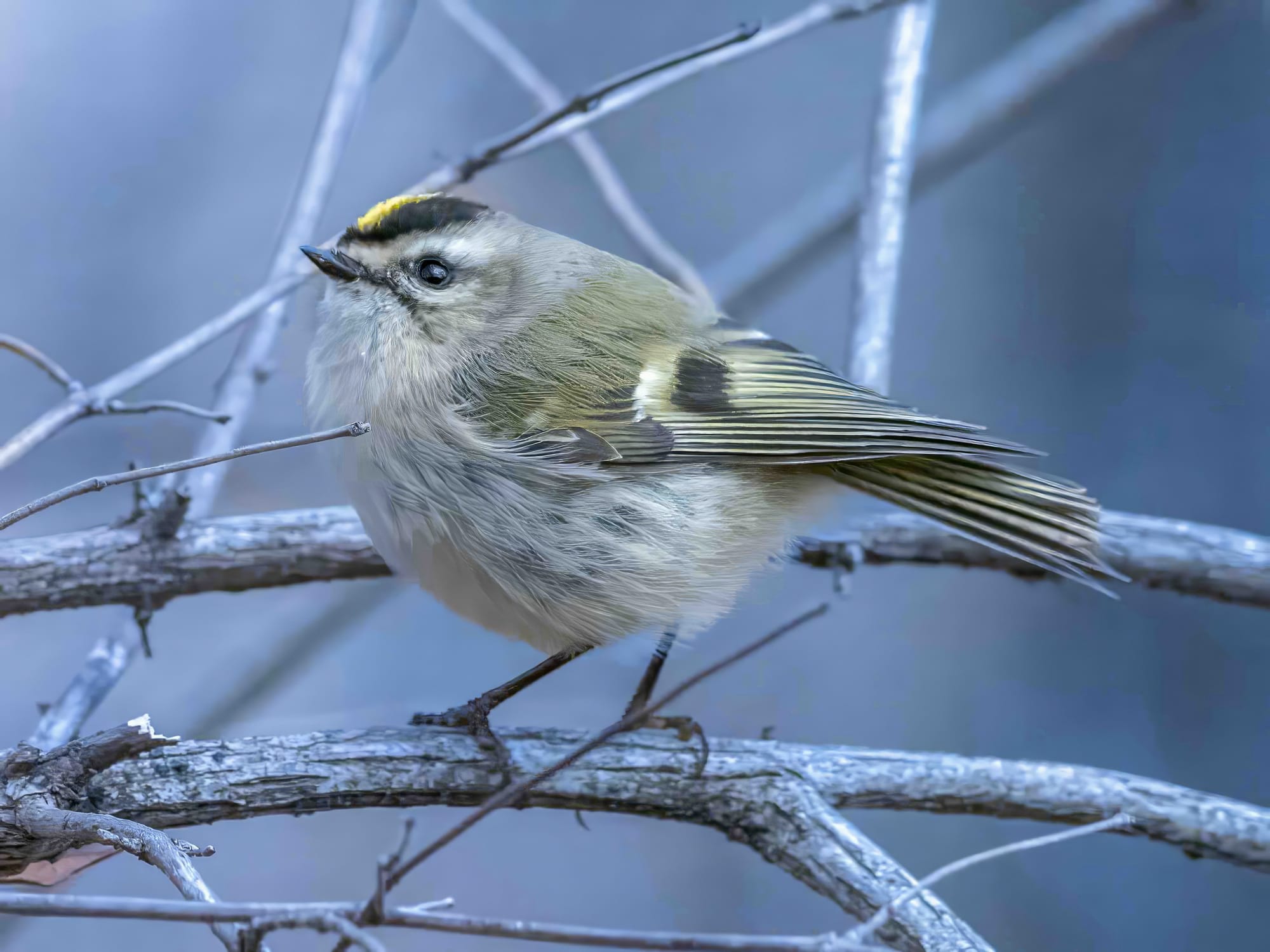
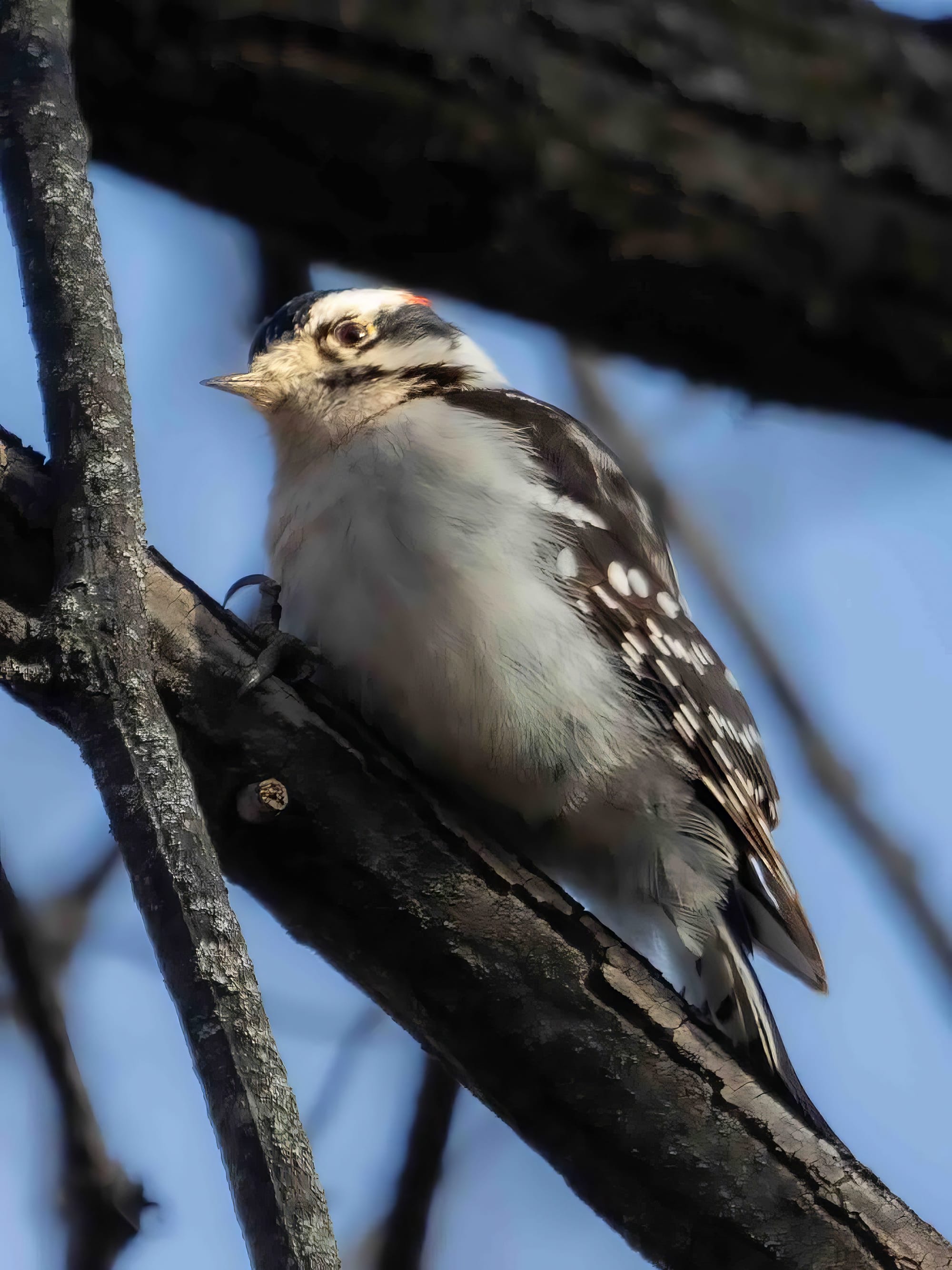
Brown Creeper, White-breasted Nuthatch, Gold-crowned Kinglet, Downy Woodpecker
A number of other birds travel with these chickadee groups. White-breasted Nuthatches forage on trunks and large branches while moving with the group, Downy Woodpeckers move along trunks and branches, Brown Creepers keep a low profile as they climb tree trunks searching the bark for arthropods, Golden-crowned Kinglets search twigs for small insects.
The Northern Cardinal, Carolina Wren, Blue Jay, and American Robin may appear in the same area but are not part of the travelling groups.
As winter progresses these bird alliances at the park settle into two distinct layers of activity; above eye level, the chickadees and titmice, below them the junco and sparrow flocks in the leaf litter. When the earliest signs of spring begin to appear the resident birds separate into breeding ranges and the winter visitors migrate back north.